Best Men’s Puffer Jackets for Style, Warmth, and Value
I read a piece in The New York Times where a reader asked whether wearing a puffer jacket to the office, as a grown man, makes him look immature, kind of like carrying a backpack.
First of all, backpacks are totally fine for the office. There are plenty of well-designed, professional backpacks made specifically for work.
But I get the concern when it comes to puffer jackets.
Puffer jackets were originally designed for mountain climbing, and outdoor performance is still their main job. But that’s not their only use case.
As far back as 1937, designer Charles James created an evening puffer (evening jacket) meant to be worn at formal events, the kind where men are wearing patent leather Oxfords and pumps.
I’m telling you this to let you know that wearing a puffer jacket to the office doesn’t make you look immature. Not if you choose the right one.
So the real question isn’t can you wear a puffer jacket to the office. It’s which puffer jacket should you wear.
And that’s exactly what this guide is about: helping you choose the right men’s puffer jacket based on what actually matters to you.
In this guide, I’ll give you a list of the 10 best men’s puffer jackets, and break them down into specific categories—whether you need extreme cold protection, packability, street style, or just a solid everyday puffer jacket.
How I Chose These Jackets
Every jacket in this guide was evaluated using eight factors:
- Insulation & Warmth-to-Weight Ratio – How warm it keeps you versus how bulky it feels
- Material Quality & Fabric Performance – Shell durability, wind resistance, water repellency
- Weather Protection – Real-world performance in rain, snow, and wind
- Weight & Bulk – Actual feel when worn or packed in a bag
- Fit & Mobility – Freedom of movement and layering compatibility
- Construction & Build Quality – Stitching quality, zipper reliability, long-term durability
- Versatility of Use – Can you wear it for multiple scenarios
- Price-to-Value Ratio – Performance versus cost
Of course, different categories come with different trade-offs.
A budget jacket will usually compromise a bit on materials or insulation.
A jacket built for extreme cold won’t be as light or packable as a lightweight option.
But taken together, these factors are enough to tell you whether a jacket is actually worth the money.
10 Best Men’s Puffer Jackets
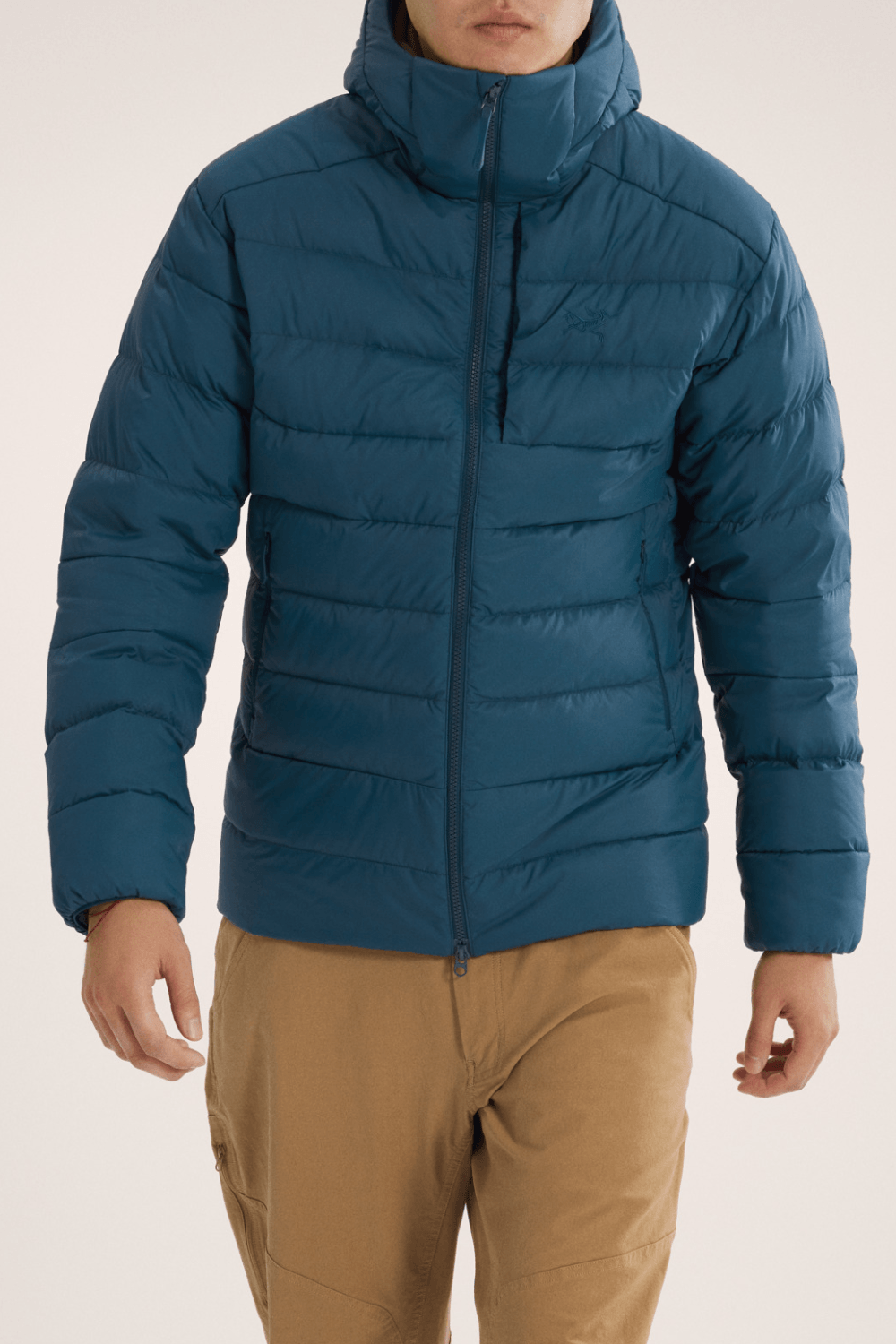

1. Best Overall Puffer Jacket — Arc’teryx Thorium Hoody
Weight: 18.2 oz | Fill: 750-fill down
Is this the warmest puffer jacket on the list? Not exactly.
Does it have the highest fill power? Nope.
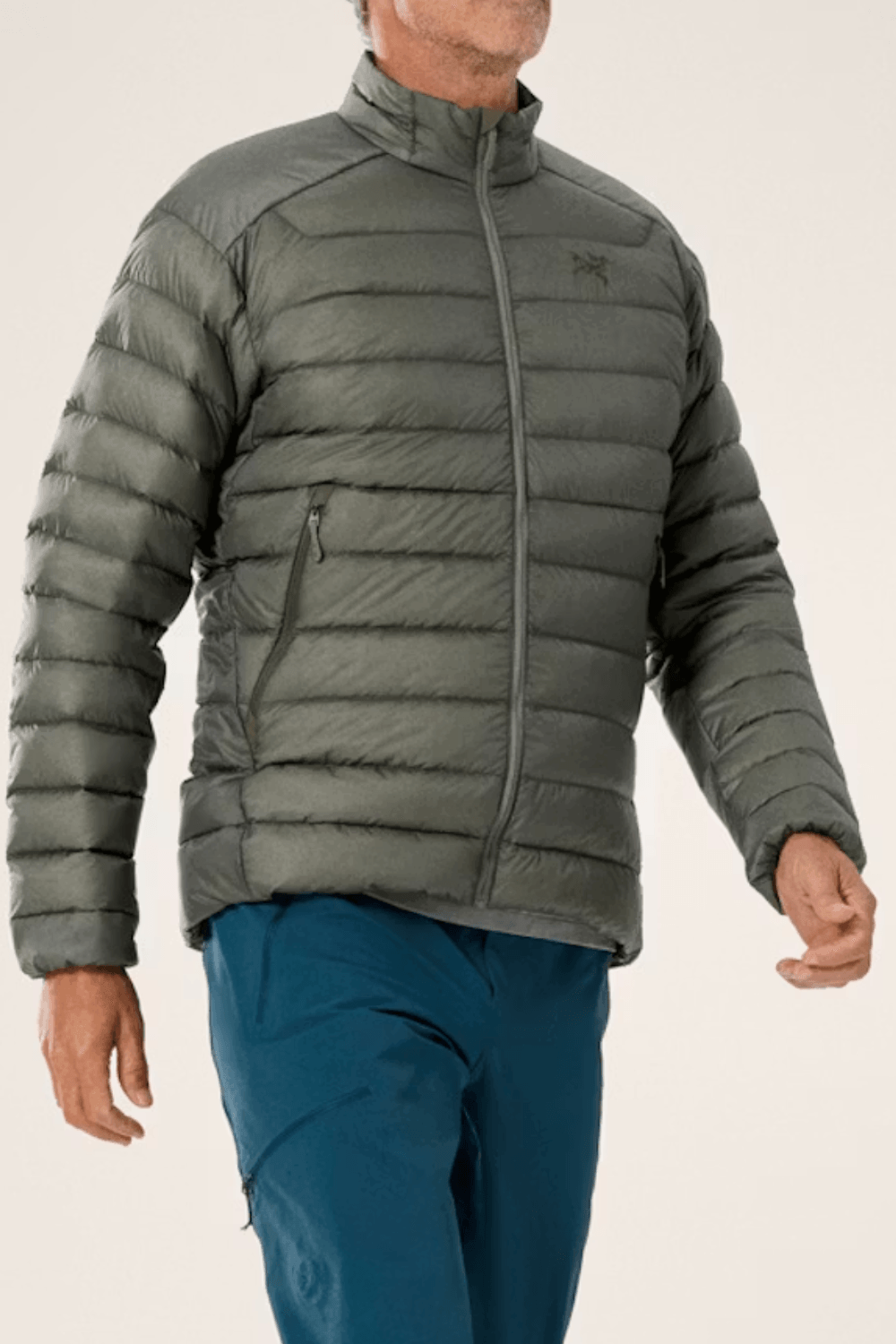
But when you look at all eight factors together, the Arc’teryx Thorium Hoody comes out on top. It’s the puffer jacket that gets the balance right.
It uses 750-fill responsibly sourced European grey goose down, which delivers plenty of warmth without unnecessary bulk.
What really makes the difference, though, is Arc’teryx’s Down Composite Mapping. Instead of using pure down everywhere, they place synthetic insulation (Coreloft) in areas that tend to get wet, like under your arms and along your shoulders.
Why does that matter? Because down loses its insulating power when it gets wet. This down-synthetic hybrid setup keeps you warm even when you’re sweating or get caught in light rain.
On top of that, the outer shell is made from Arato 30-denier nylon with a DWR (durable water repellent) finish, so light rain beads up and rolls off instead of soaking through.
All the technical details aside, this is just a genuinely versatile jacket that strikes a great balance between performance and everyday wearability. It’s warm without being bulky, and the fit is not too tight or boxy. You can wear it on a mountain hike or straight to the office without feeling out of place.
2. Best Budget Puffer Jacket — Decathlon Simond MT100 Down Puffer Jacket
Weight: 11.3 oz | Fill: 800-fill down
This puffer jacket has the highest price-to-performance ratio on the list.
It uses 800-fill duck down, which is higher fill power than what you’ll find on some jackets that cost three times as much.
And because it weighs just 11.3 oz (~320 g), it also delivers one of the best warmth-to-bulk ratios. Serious warmth without a lot of weight or puffiness.
Here’s my favorite feature: it packs into its own left-hand pocket with a double-pull zipper. No separate stuff sack needed. Just zip it up and toss it in your backpack.
Now, is it the absolute warmest puffer jacket on the list? No. But that’s not the point. What it does give you is about 80% of the performance of premium jackets at roughly 25% of the price. The 800-fill down is genuinely high-quality, and the construction is solid enough for real outdoor use or everyday wear.
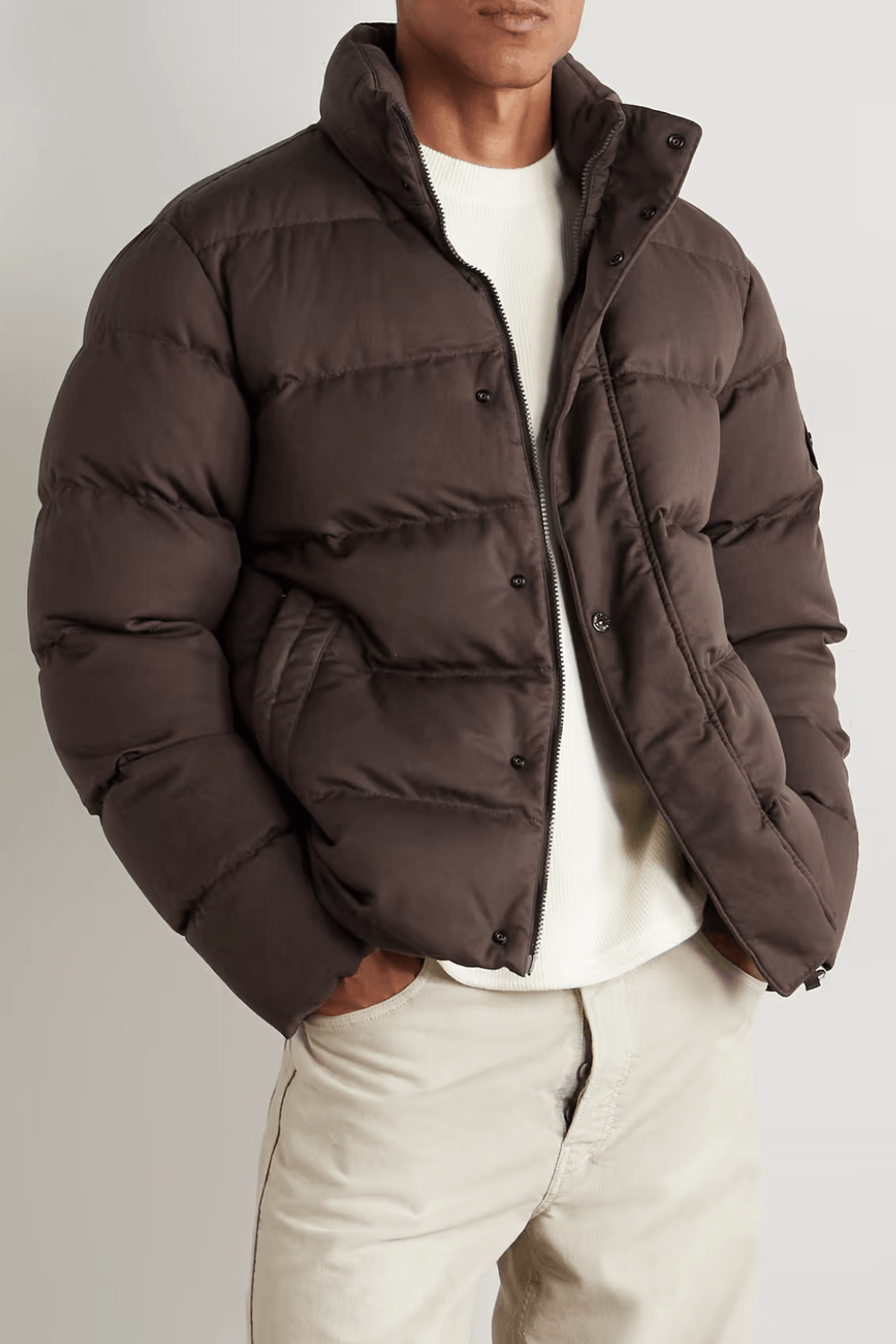
3. Best Designer Puffer Jacket — Stone Island Ghost Garment-Dyed Down Jacket
Fill: 80% duck down, 20% feathers
This puffer jacket is made for cities rather than mountain peaks, and you’ll probably see it on fashion influencers in Milan, Tokyo, and New York.
It’s made from quilted virgin wool twill that’s been garment-dyed and treated with an anti-drop finish.
The garment-dyeing process deepens the color and creates subtle variations, which means no two jackets look exactly the same.
And the anti-drop finish helps with durability, which matters because while the wool twill shell is soft and more refined than technical outdoor shells made of synthetic fibers, it’s also more delicate.
Inside, the insulation is a blend of duck down and feathers, and fully lined with nylon, so you’re getting proper warmth, not just a fashion piece.
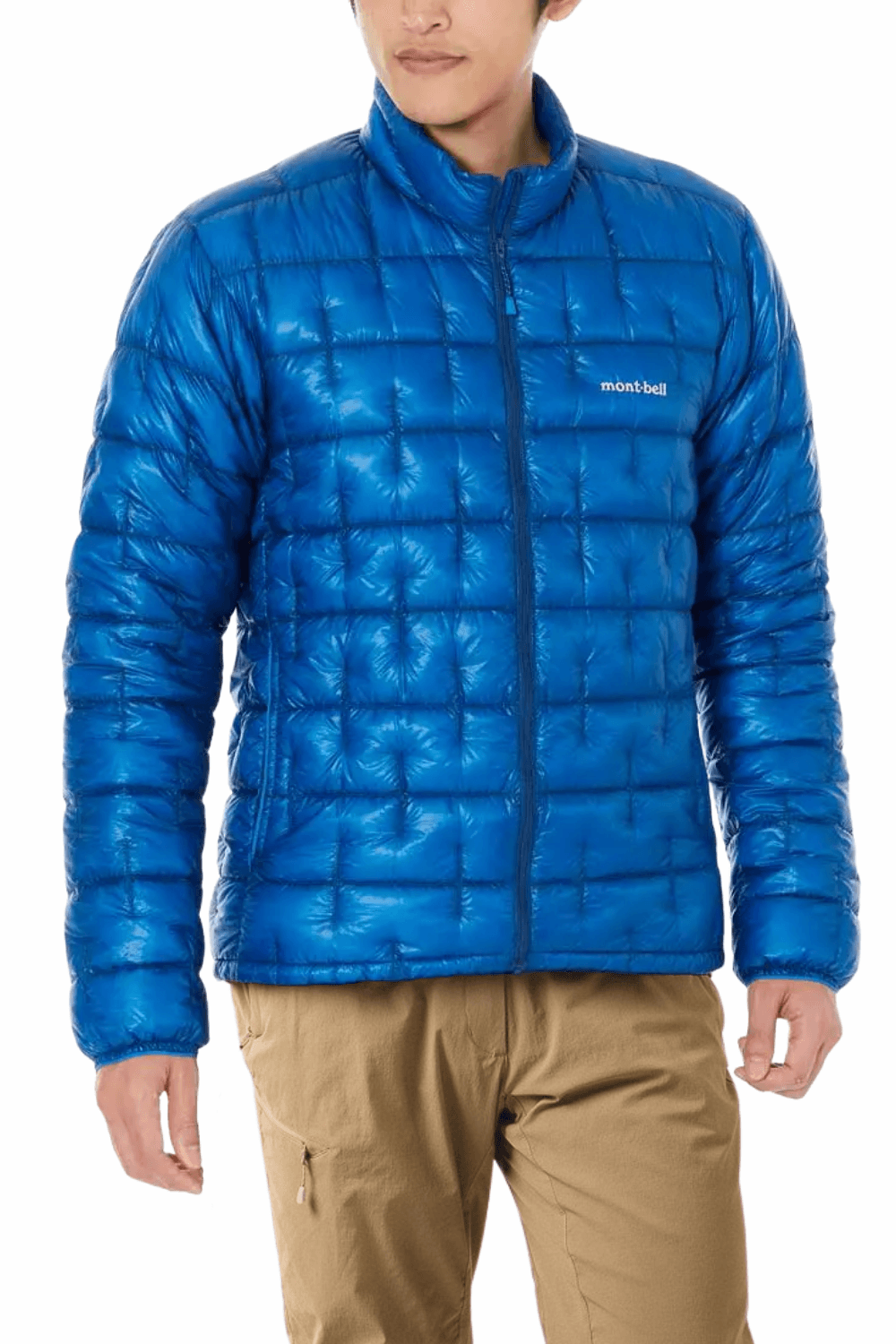
4. Best Lightweight Puffer Jacket — Montbell Plasma 1000 Down Jacket
Weight: 4.9 oz | Fill: 1000-fill down
4.9 ounces.
That’s lighter than an iPhone 17 (6.24 oz). And it also packs down to the size of a Nalgene bottle (literally: 3.9 × 5.5 inches).
The jacket comes with its own stuff sack, so you can just throw it in your bag, and you’ll forget it’s even in there.
Despite how light and packable it is, it’s still a fully functional down jacket. So how does Montbell pull that off?
First off, it uses 1000-fill power European down—the highest-quality down you can buy—and wraps it in a 7-denier Ballistic Airlight nylon shell. For context, most sleeping bag liners use 10–15 denier fabric. This is gossamer-thin.
On top of that, it uses a unique “skip-stitch” quilting pattern that reduces cold spots by letting the down loft properly instead of getting crushed by stitching. Most quilted jackets lose warmth wherever there’s stitching, because the down in those areas gets compressed, can’t loft properly, and creates thin zones.
Put all of that together, and no other jacket at this price point comes close to the warmth-to-weight ratio. It’s half the weight of most ultralight jackets, but still delivers proper warmth.
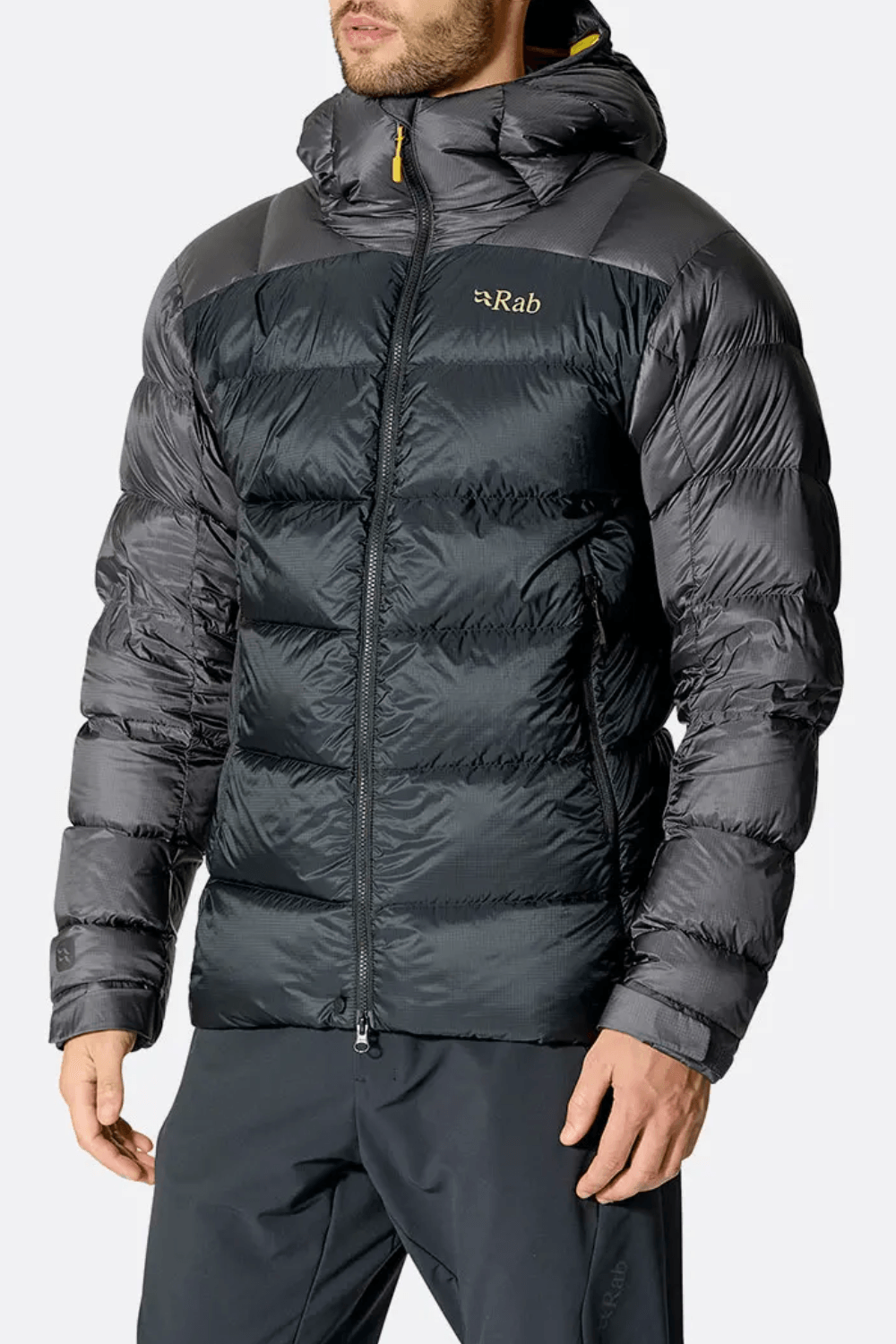
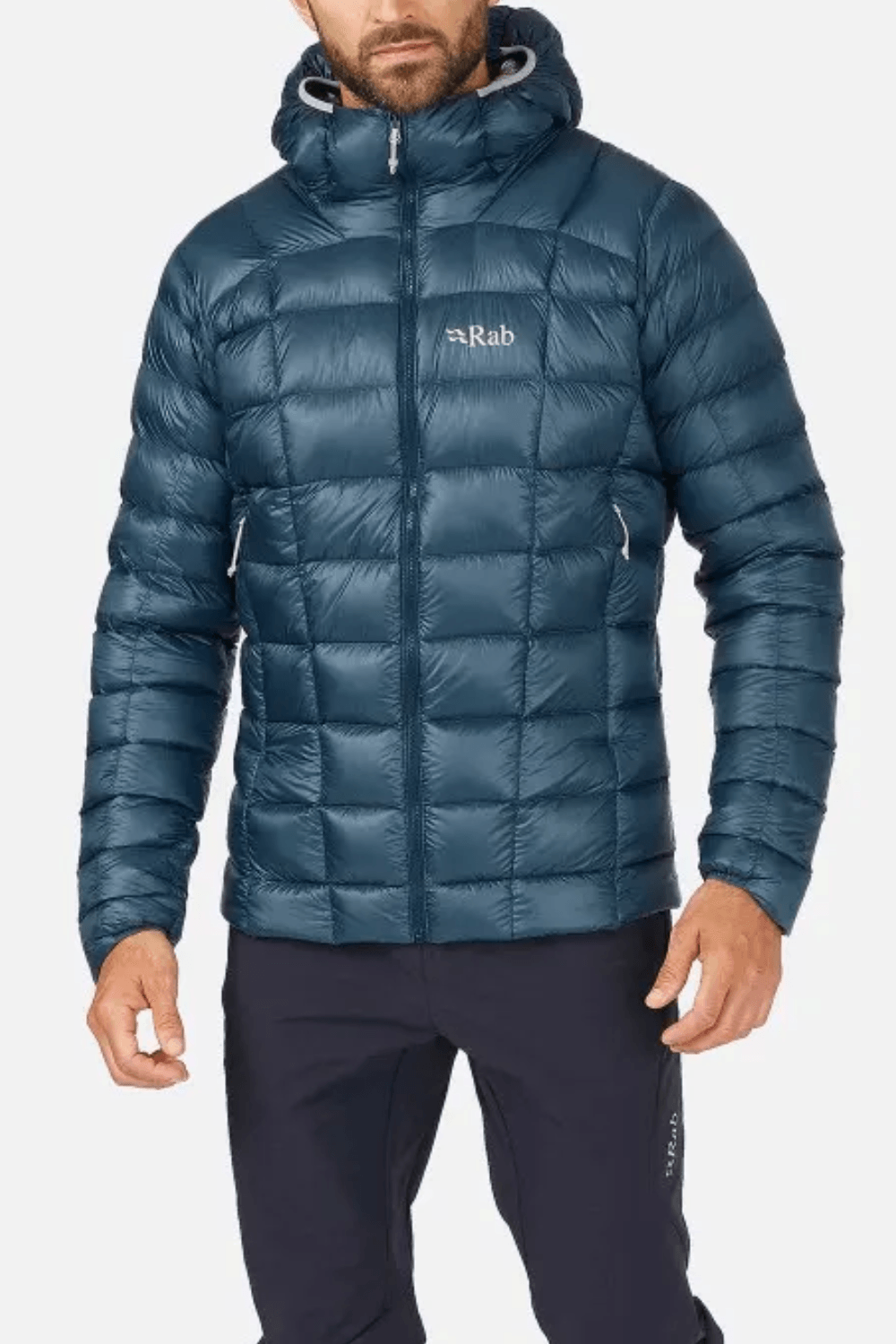
5. Best Puffer Jacket for Extreme Cold - Rab Neutrino Pro Down Jacket
Weight: 19.9 oz | Fill: 800-fill down
Puffer jackets are built for cold weather. This one is built for brutal cold weather.
It’s filled with 800-fill European goose down that’s been treated with a fluorocarbon-free hydrophobic finish, which means it handles moisture far better than untreated down and keeps insulating even when the snow starts melting on you, or you start to sweat.
On top of that, the shell uses 20-denier Pertex Quantum Pro ripstop. It’s tougher than most lightweight puffers, but it still compresses down small enough to put into your pack when you’re not wearing it.
And there are some details that make a big difference once you’re actually out in the cold.
First off, the two-way front zipper. It lets you vent from the bottom while keeping your chest covered. It makes a big difference when you’re moving.
Then the glove-friendly cuff adjustments. You can adjust the cuffs with your gloves on. It matters when it’s already freezing, and you don’t want bare hands in the wind.
What I love most, though, is the hood. It’s fully adjustable, helmet-compatible, and has a stiffened peak, so it actually shields your face whenever you’re climbing a mountain or just waiting for the bus in blowing snow.
Rab rates this for Insulation level: 5/5 in their own performance metrics. This is their warmest non-expedition jacket. So if you live somewhere where winter temperatures drop into single digits and want a puffer jacket that can handle it, this one is for you.
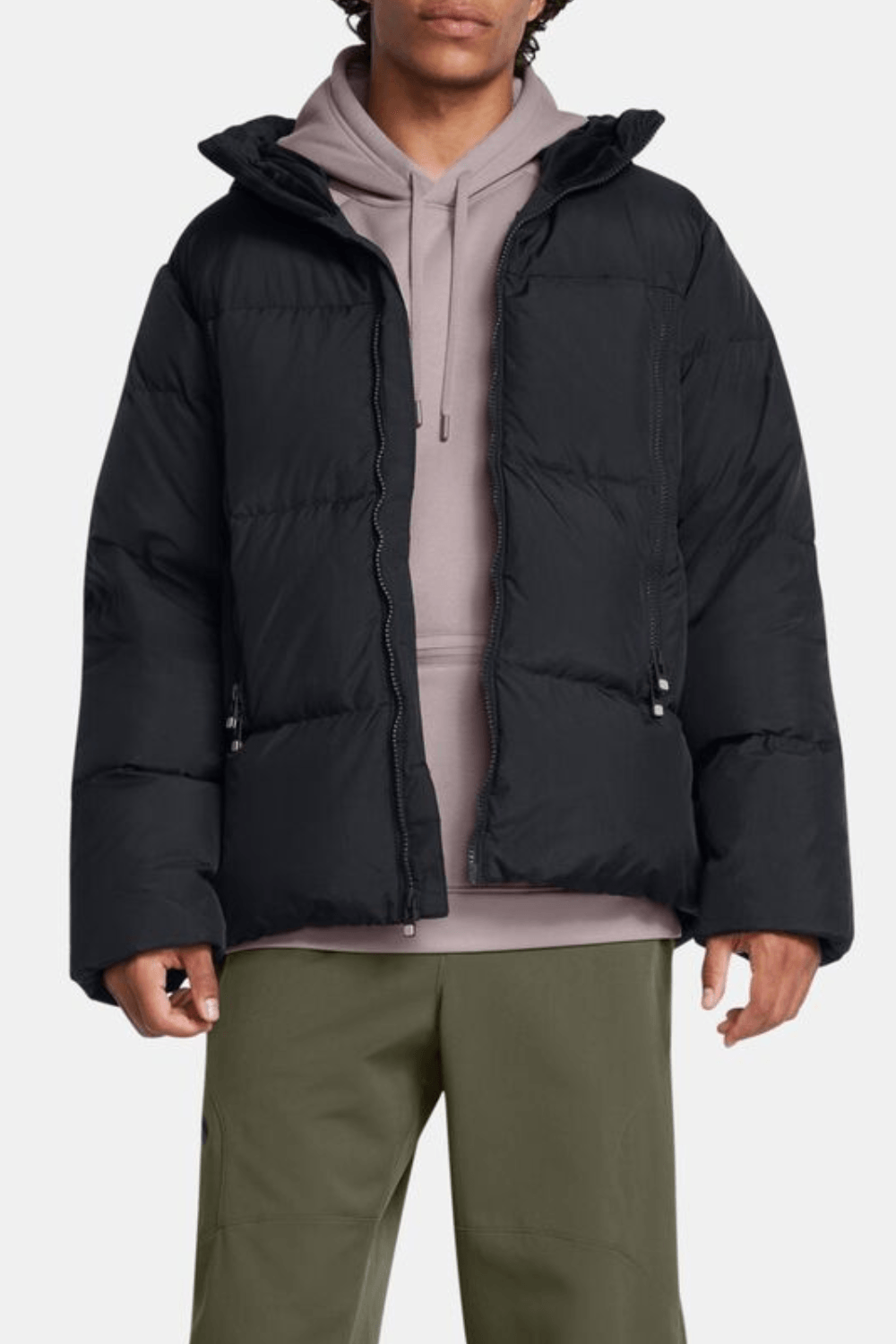
6. Best Everyday Puffer Jacket - Under Armour UA Limitless Down Jacket
Fill: 700-fill down
The Under Armour Limitless Down Jacket looks like a stylish winter jacket, but performs like a technical puffer.
It looks stylish and lifestyle-focused thanks to the looser cut, muted shell, and minimal stitching. You can throw it over sweaters or hoodies comfortably without feeling restrictive.
But underneath that stylish look, it works like a performance puffer. Here’s how.
First, it uses 700-fill Allied duck down. That’s not expedition-level insulation, but it’s more than enough for most winter conditions.
On top of that, the shell uses UA Storm technology, so light rain and snow just bead up and roll off instead of soaking in.
But here’s what really levels up the performance – the ColdGear® Infrared lining. It uses tiny ceramic particles to reflect your body heat back toward you, basically the same idea as a thermos. Once you warm up, it keeps that heat in.
This is a perfect hybrid of technical and everyday jackets. It looks good, feels comfortable, and handles most winter weather. Perfect for commuting, errands, and daily life.
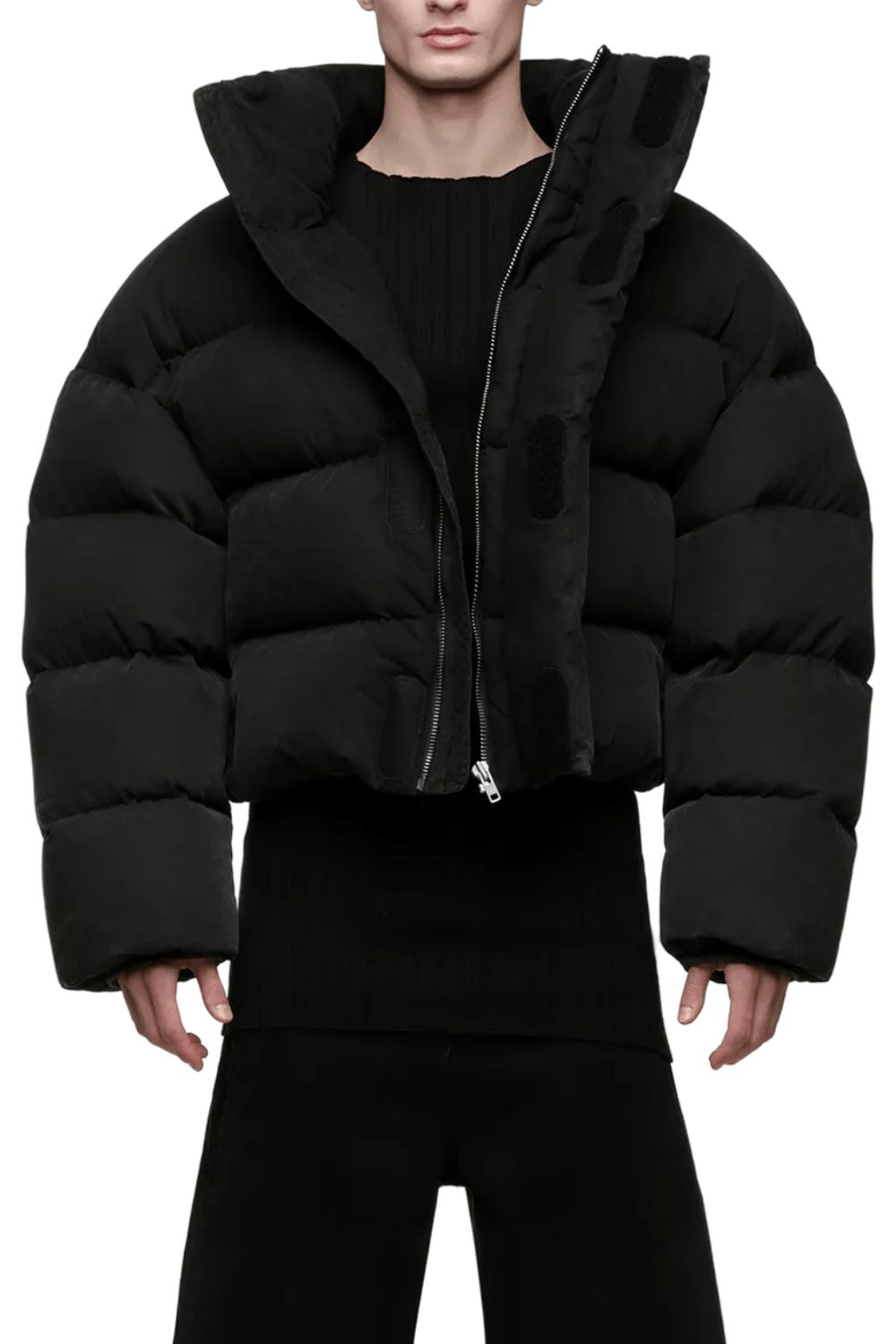
7. Best Streetwear Puffer Jacket - Entire Studios MML puffer jacket
Fill: 700-fill down
This is the anti-hype puffer jacket that streetwear insiders actually wear. No logos, no shiny fabrics, no loud branding.
The shell is 100% cotton and garment enzyme-washed, so it looks broken-in straight out of the box. No stiffness. No crinkly noise when you move.
Inside, you get 700-fill ethically sourced duck down (90% down, 10% feathers). It uses quilted compartments to keep the insulation evenly distributed, and internal ribbed cuffs help seal out cold air at the wrists. So you’re getting real warmth, not just the look.
The construction is solid too. Instead of an exposed zipper running down the front, Entire Studios uses YKK metal zippers hidden behind a Velcro storm flap. It feels intentional and clean.
What really makes this a streetwear jacket, though, is the cut.
It’s boxy and slightly oversized, so it works easily over hoodies and crewnecks. But it’s also cropped, which keeps it from feeling sloppy or oversized in a bad way.
If you want a puffer jacket with exceptional materials and understated craftsmanship, this is it.
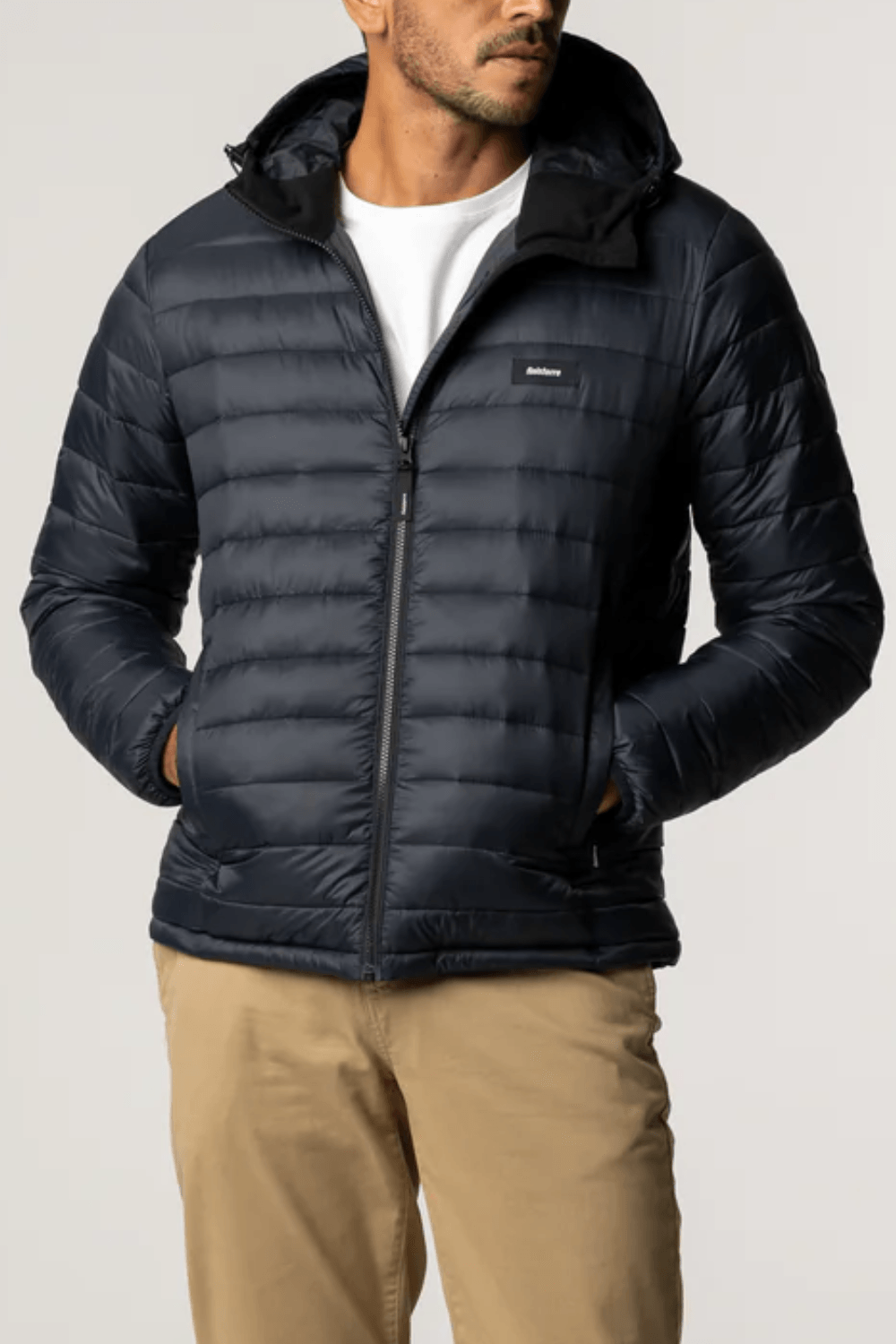
8. Best Sustainable Puffer Jacket - Finisterre Nimbus Hooded Jacket
Weight: 22 oz | Fill: 230g recycled synthetic
Hundreds of tons of fishing nets are abandoned in our oceans every year, and Finisterre took that problem and turned it into a solution.
The Nimbus Hooded Jacket is made from NetPlus—a recycled polyamide fabric created entirely from discarded fishing nets pulled from the ocean, but it doesn’t feel recycled at all. It’s surprisingly soft, more like premium nylon than recycled material.
The insulation is 100% Repreve recycled fill sourced from ocean-bound plastics. Even the water-repellent finish is PFAS-free (no harsh fluorocarbon chemicals).
This isn’t greenwashing. Finisterre has been refining this jacket for over two decades, and it’s now their bestselling piece.
In terms of everyday use, the jacket is lightweight and packable. It packs down into its own chest pocket, which also doubles as a travel pillow.
The construction details are solid, too. YKK Vision zippers, adjustable hood with rear toggle, microfiber-lined collar, cuffs, and pockets.
Finisterre proves that eco-conscious doesn’t mean compromising on quality or performance. If you want a genuinely well-made jacket from a brand that actively removes ocean waste from the environment, this is it.
9. Best Performance Puffer Jacket - Rab Mythic G Down Jacket
Weight: 9.8 oz | Fill: 1000-fill down
Rab again.
The Rab Mythic G Down Jacket weighs just 9.8 ounces. That’s only about twice the weight of the Montbell Plasma, but with more features and a tougher build.
The jacket uses 1000-fill European goose down with stitch-through construction, which keeps weight down compared to boxed baffles, and the shell is 7-denier Atmos nylon ripstop with a DWR finish, so it can handle light moisture.
The hood is also down-filled, and like the Neutrino Pro, it features a stiffened peak, so it actually shields your face.
Construction is excellent. Pre-curved, articulated sleeves improve movement, so it doesn’t feel restrictive when you’re reaching or climbing. The lightweight YKK VISLON front zipper has a fleece-lined chin guard, and the two zipped hand pockets help warm up cold, numb hands.
This jacket is properly warm without feeling bulky. The TILT lining technology actually works, reflecting heat back toward your body. If you’re looking for a true performance puffer built for serious alpine use, this is the one to get.
10. Best Retro Puffer Jacket - The North Face 1996 Retro Nuptse Jacket
Weight: 27.3 oz | Fill: 700-fill recycled down
The Nuptse became an icon. It’s worn by mountaineers, hip-hop artists, streetwear lovers, and more. And this retro version stays very close to the original: oversized baffles, a boxy silhouette, shiny ripstop fabric, and that unmistakable ’90s look.
That said, it’s been quietly updated. The shell, overlay, and lining are made from recycled nylon, the 700-fill down is recycled waterfowl down, and the DWR finish is non-PFC (no harsh chemicals).
This jacket is timeless, the brand recognition is unmatched, and the performance is genuinely solid for the price. If you want a puffer that blends nostalgia with modern materials and everyday usability, this is the one.
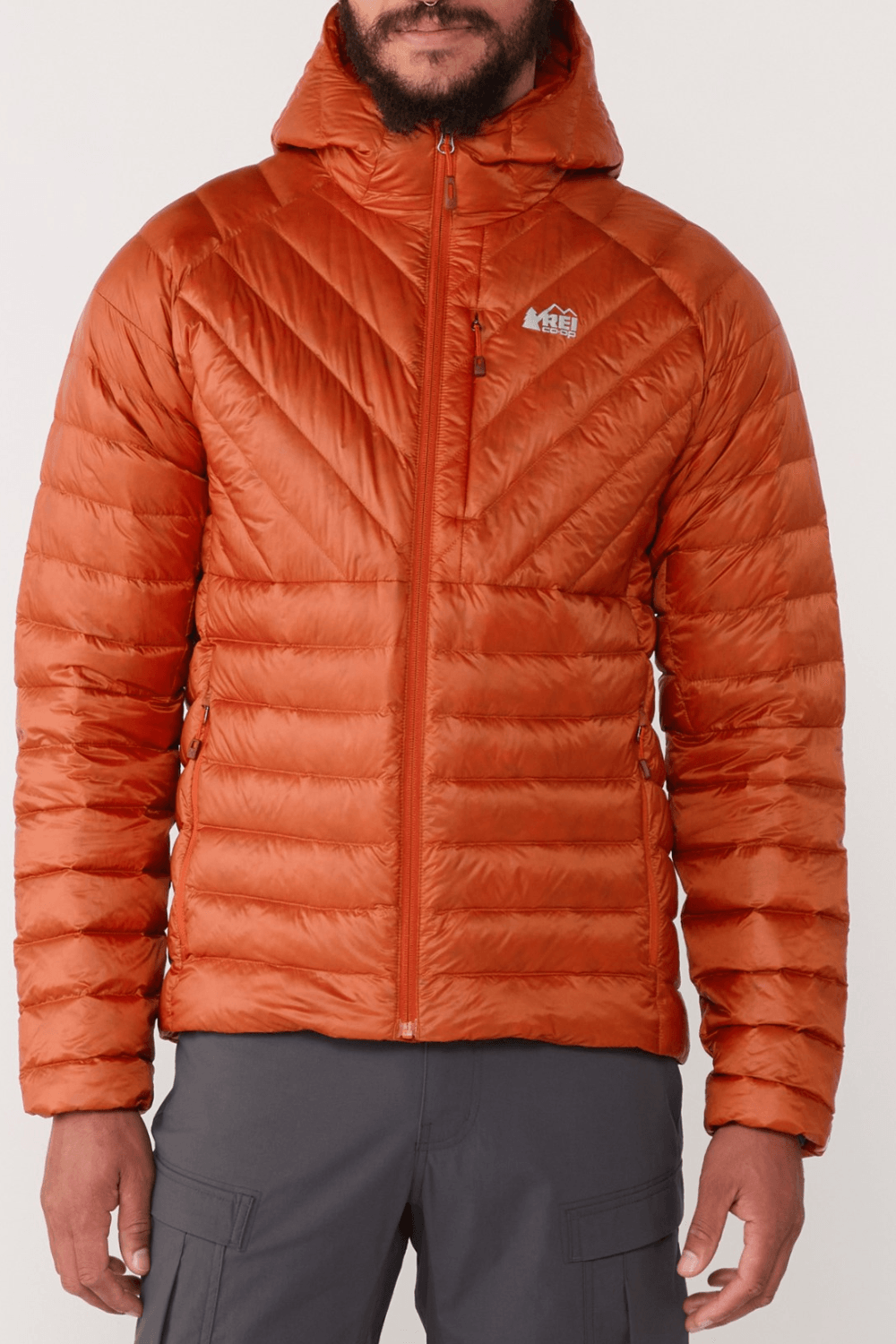
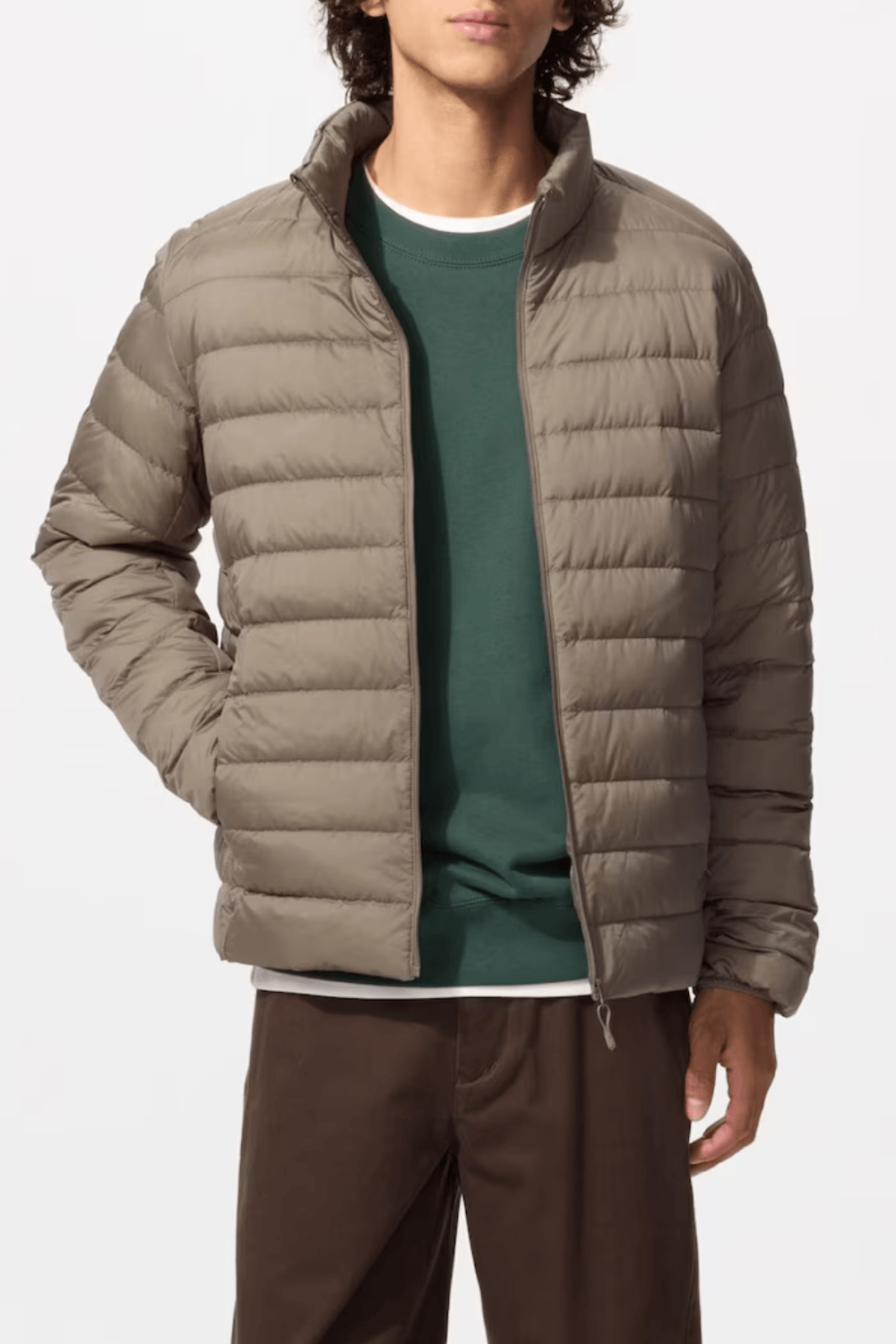
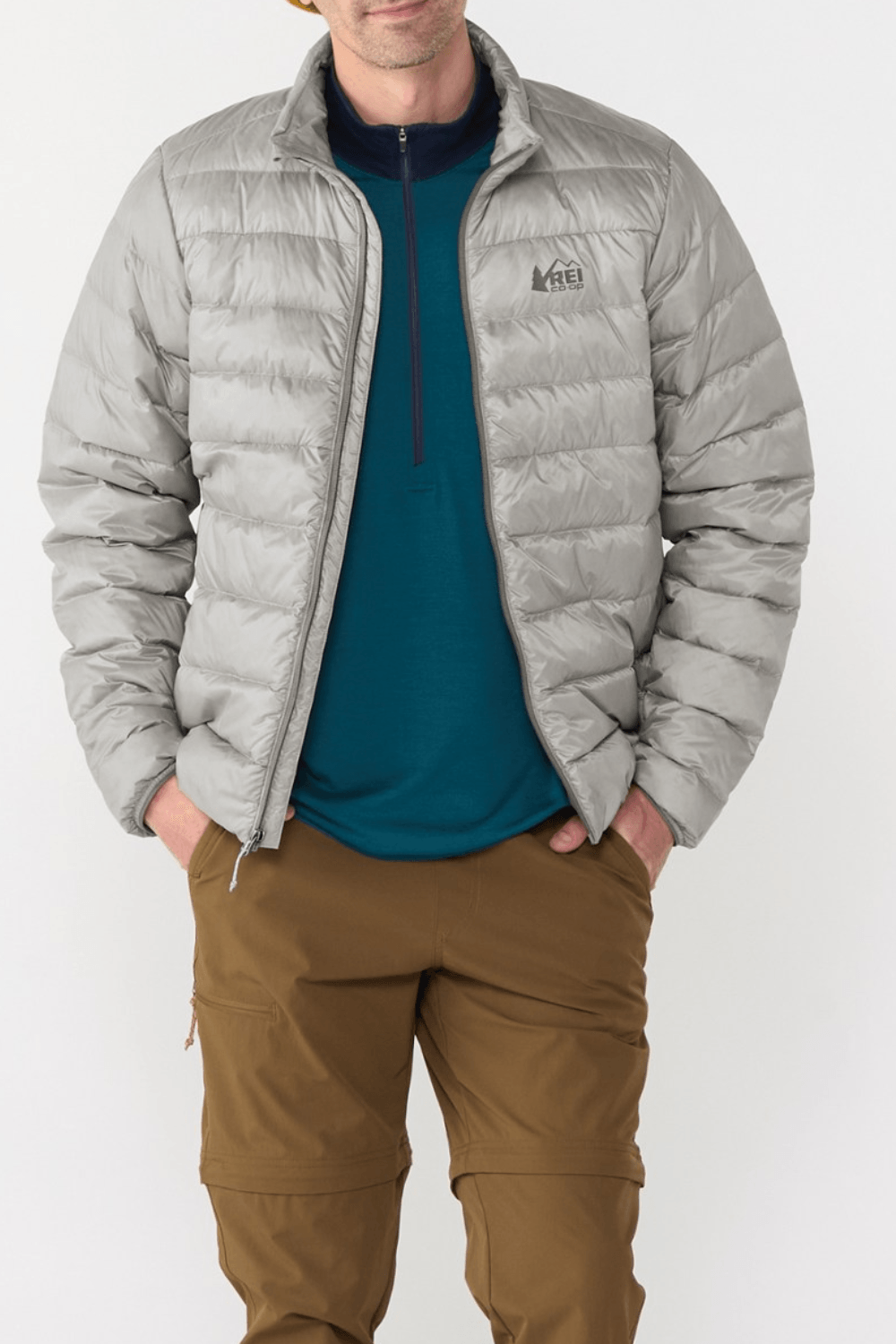
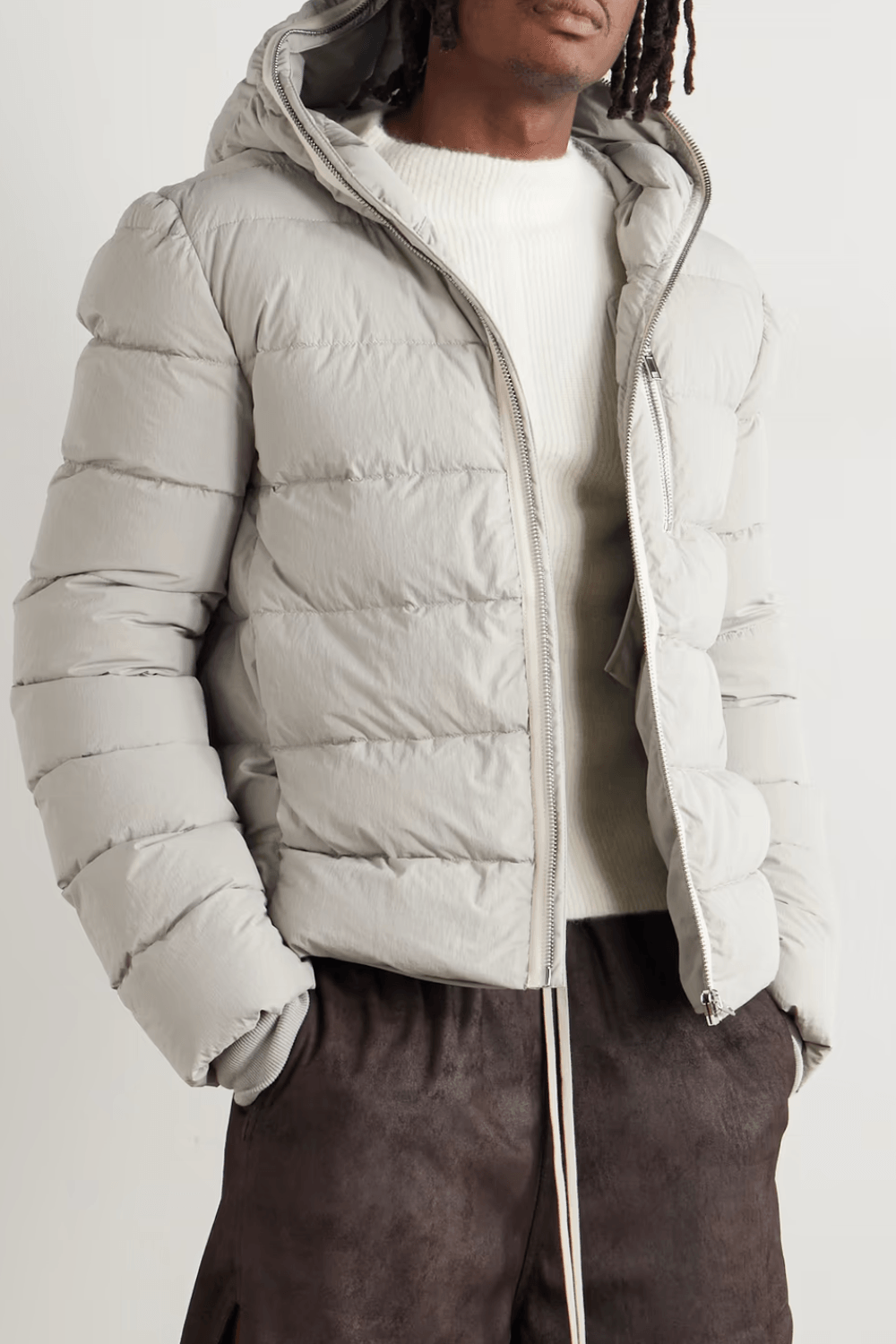
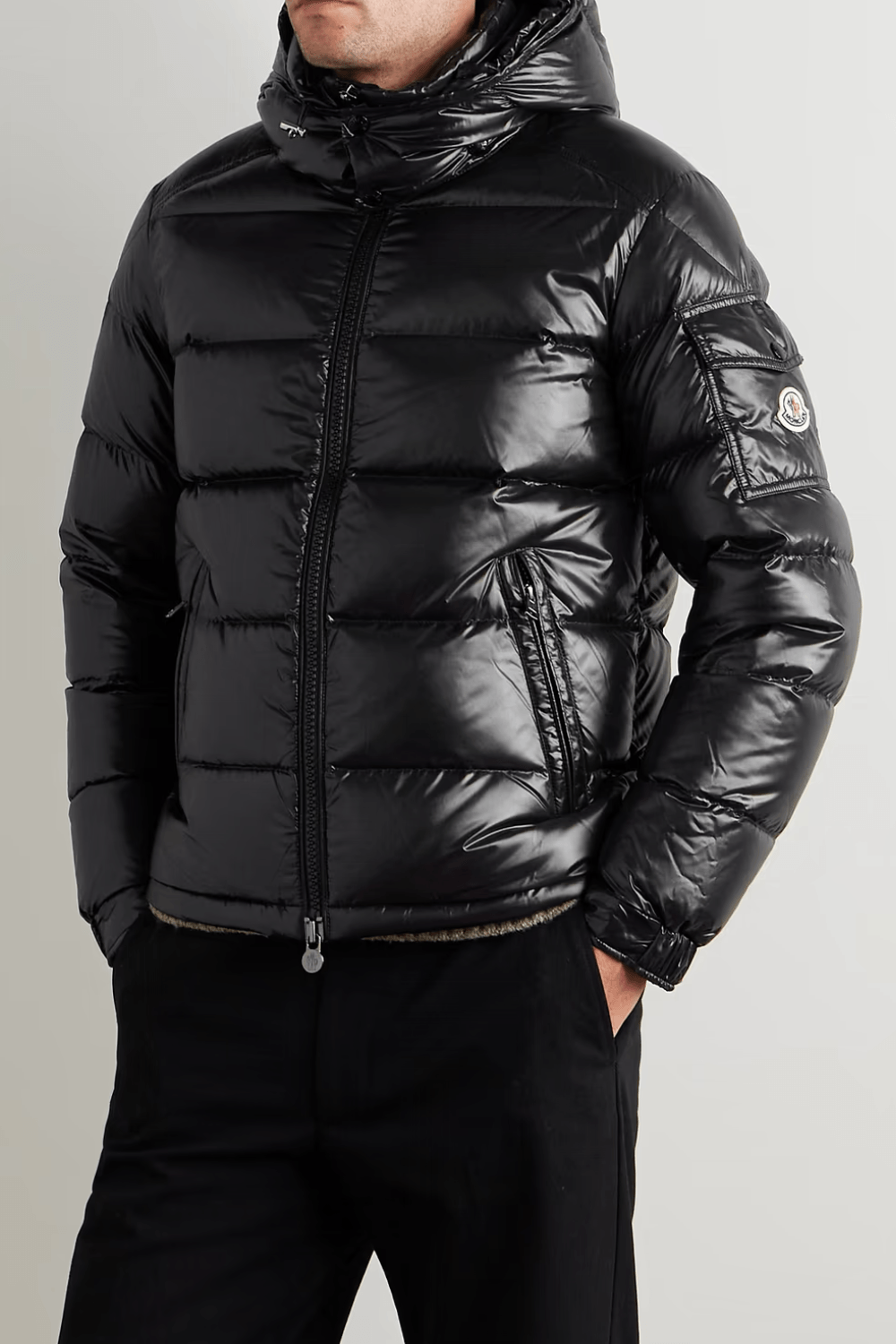
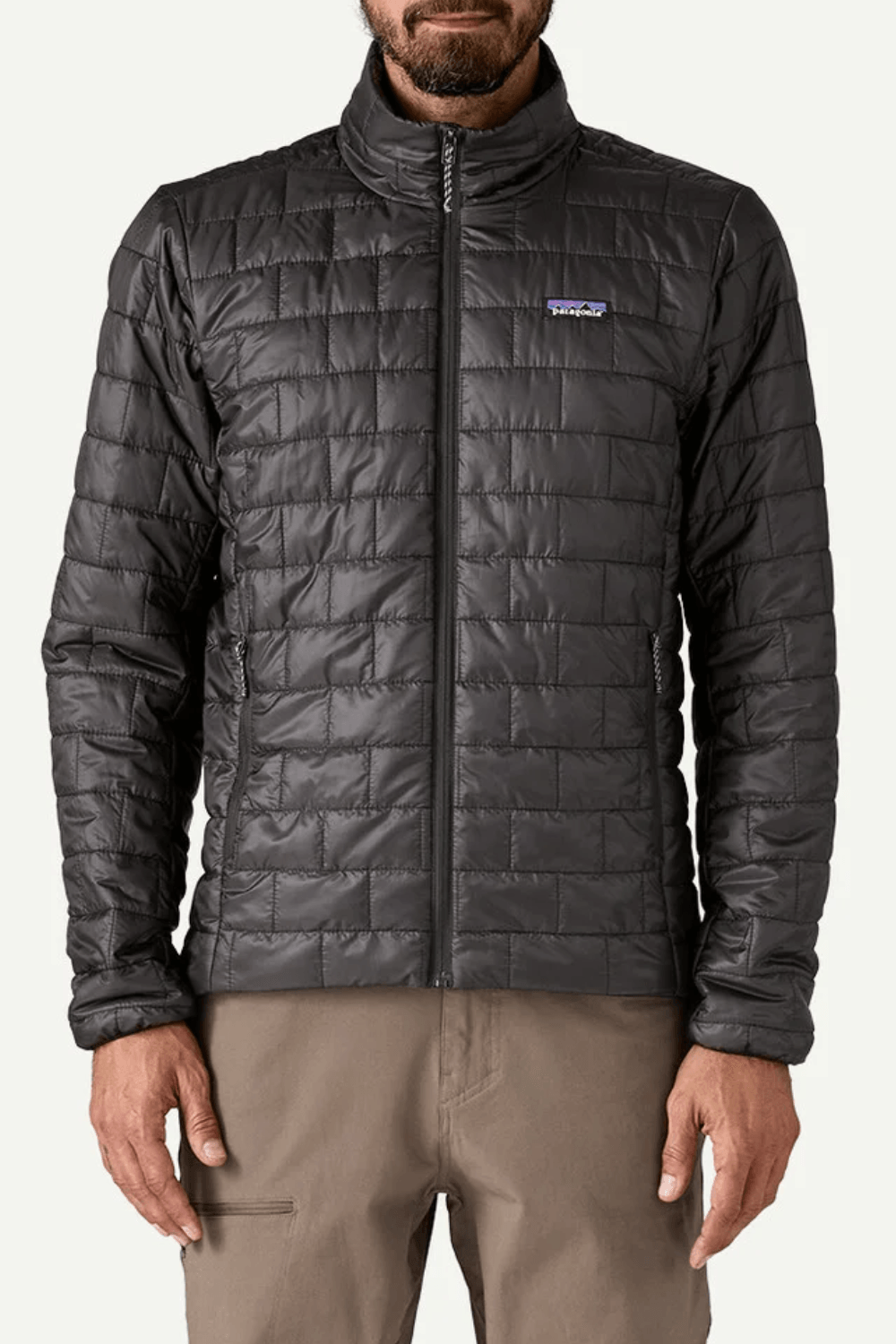
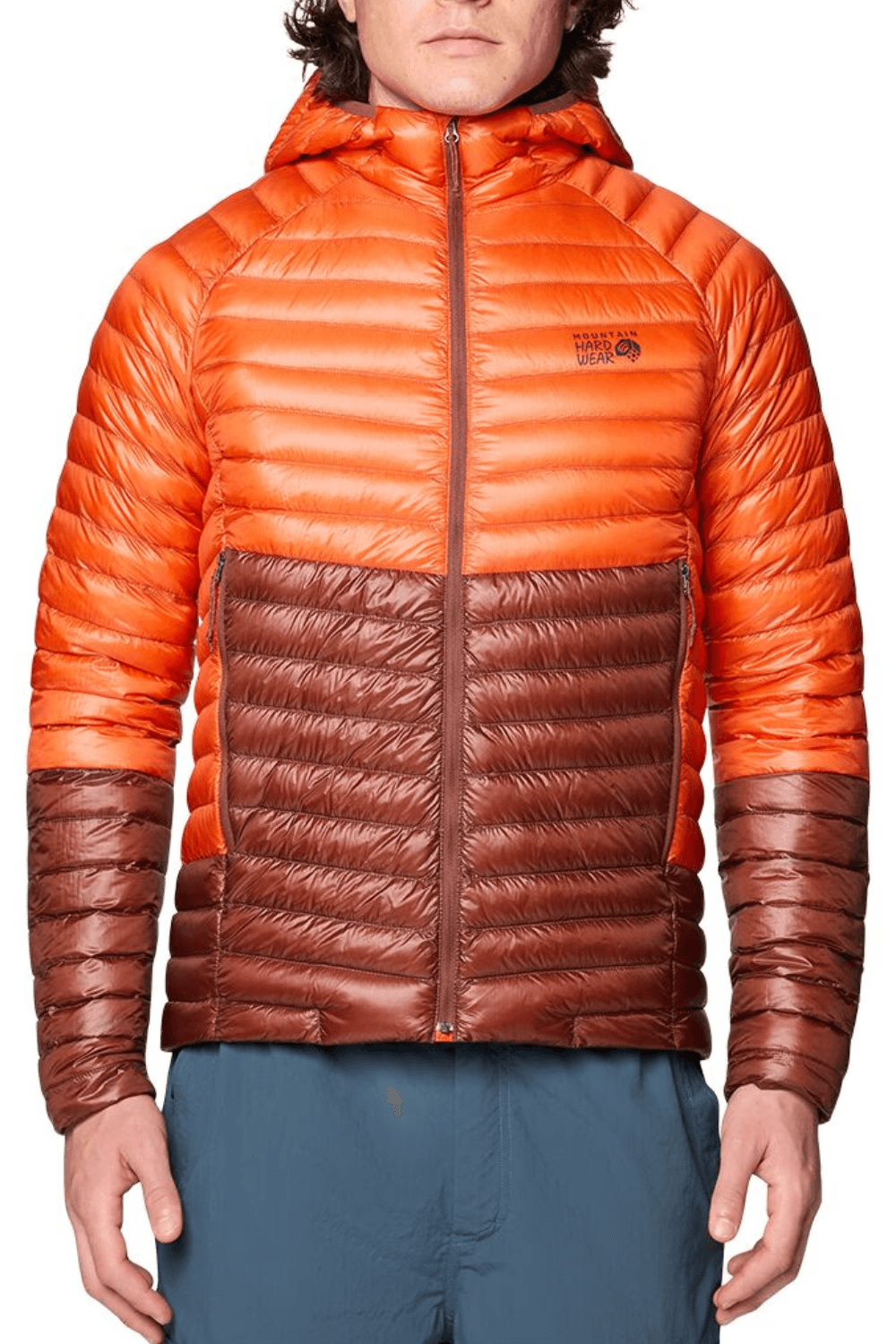
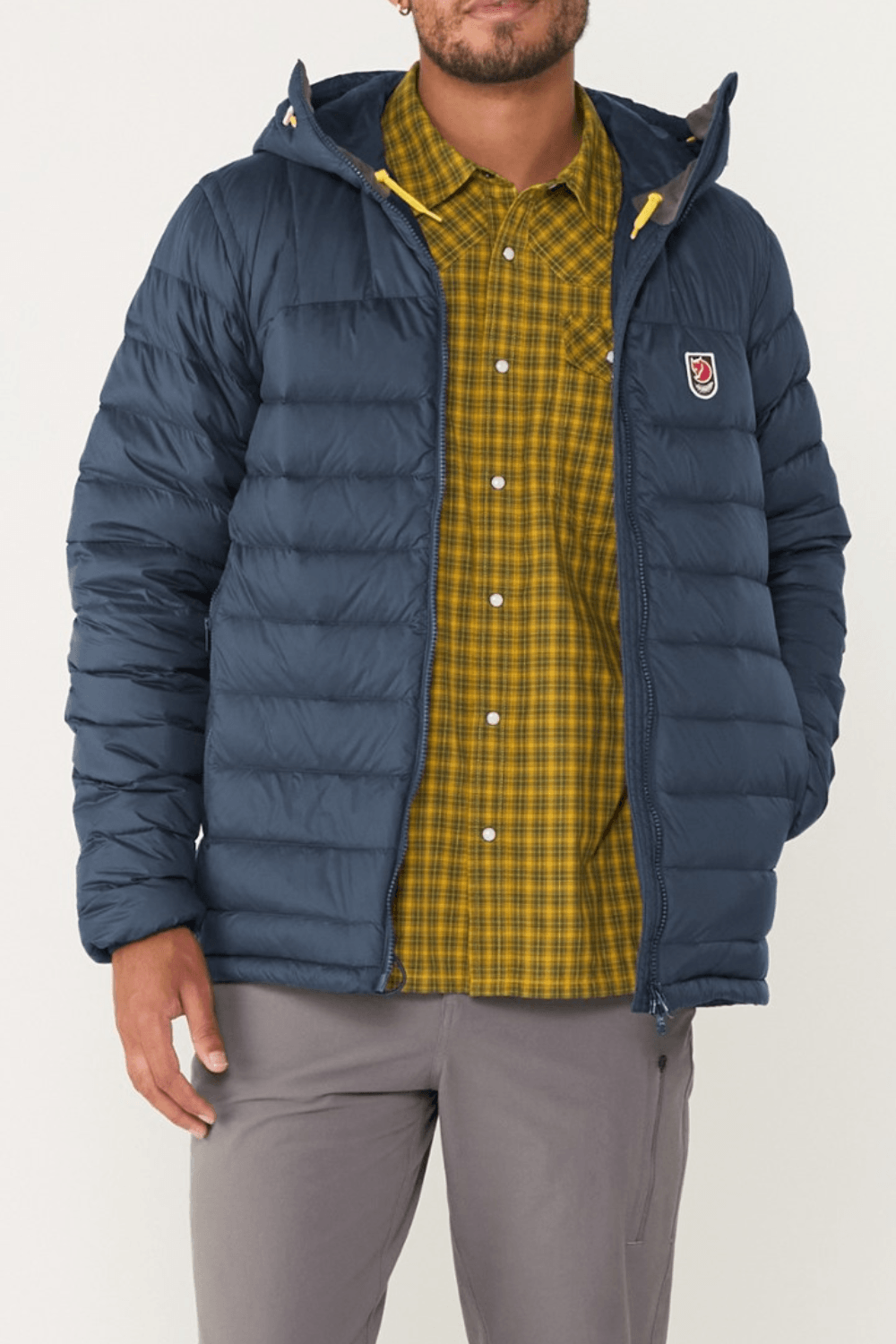
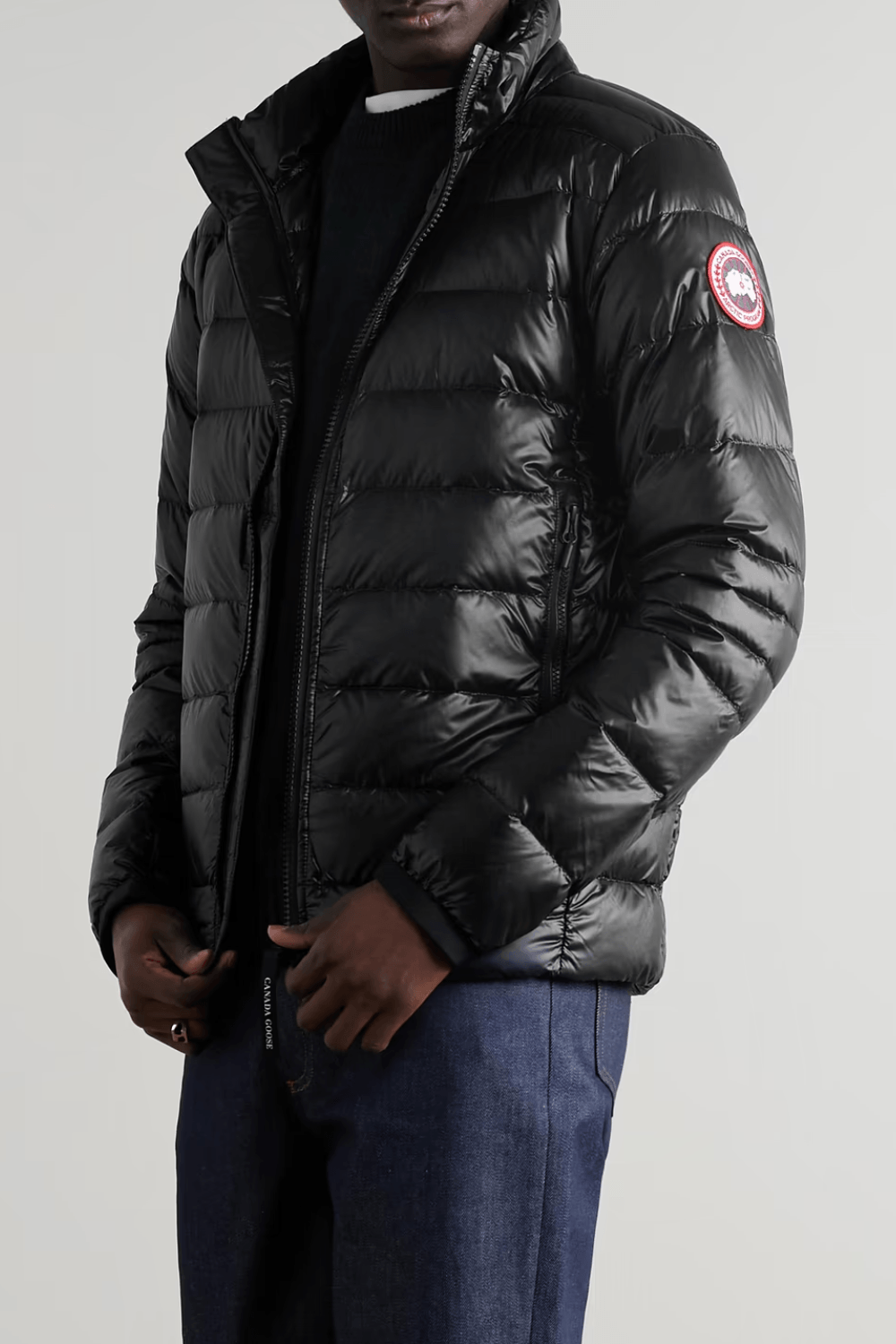
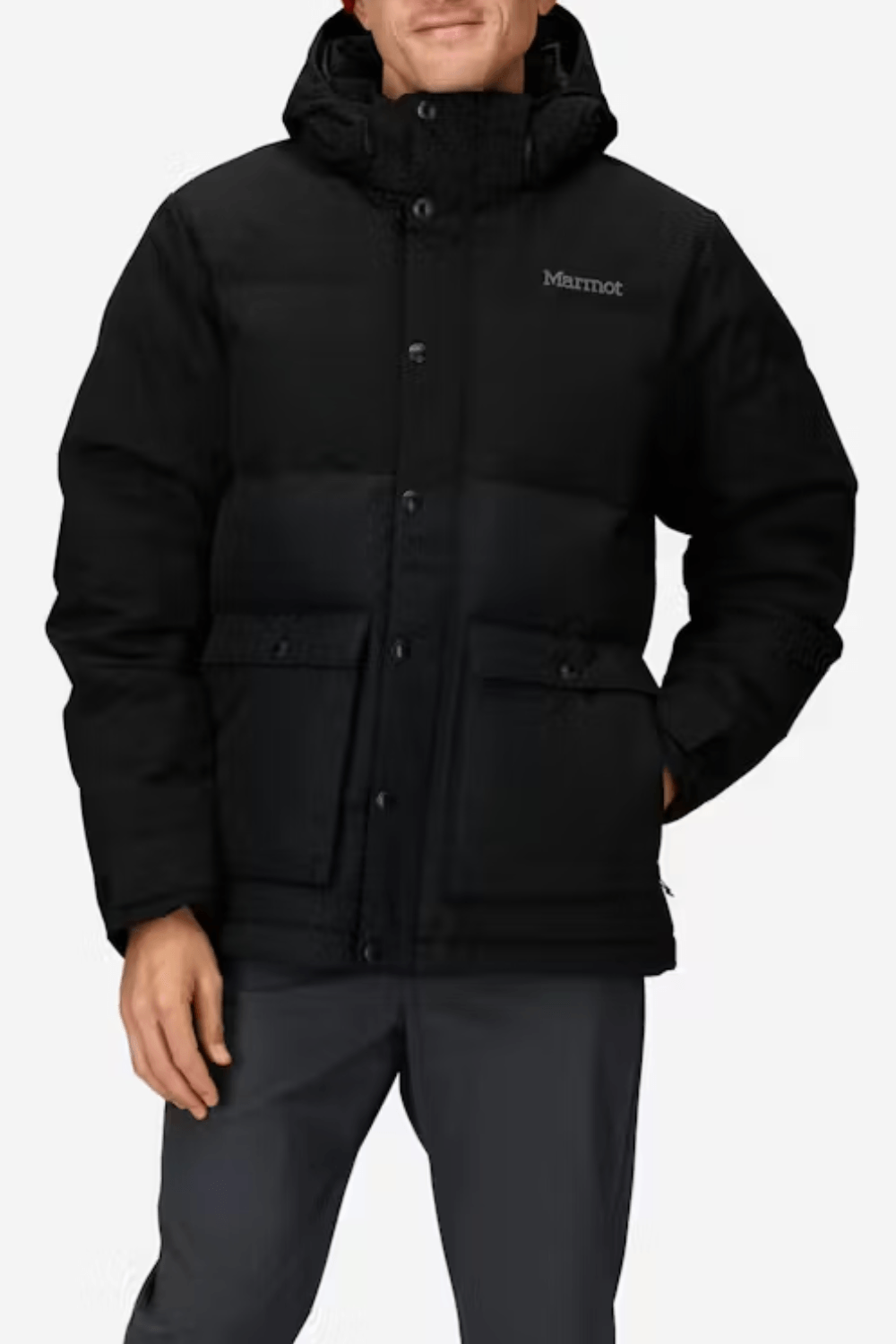
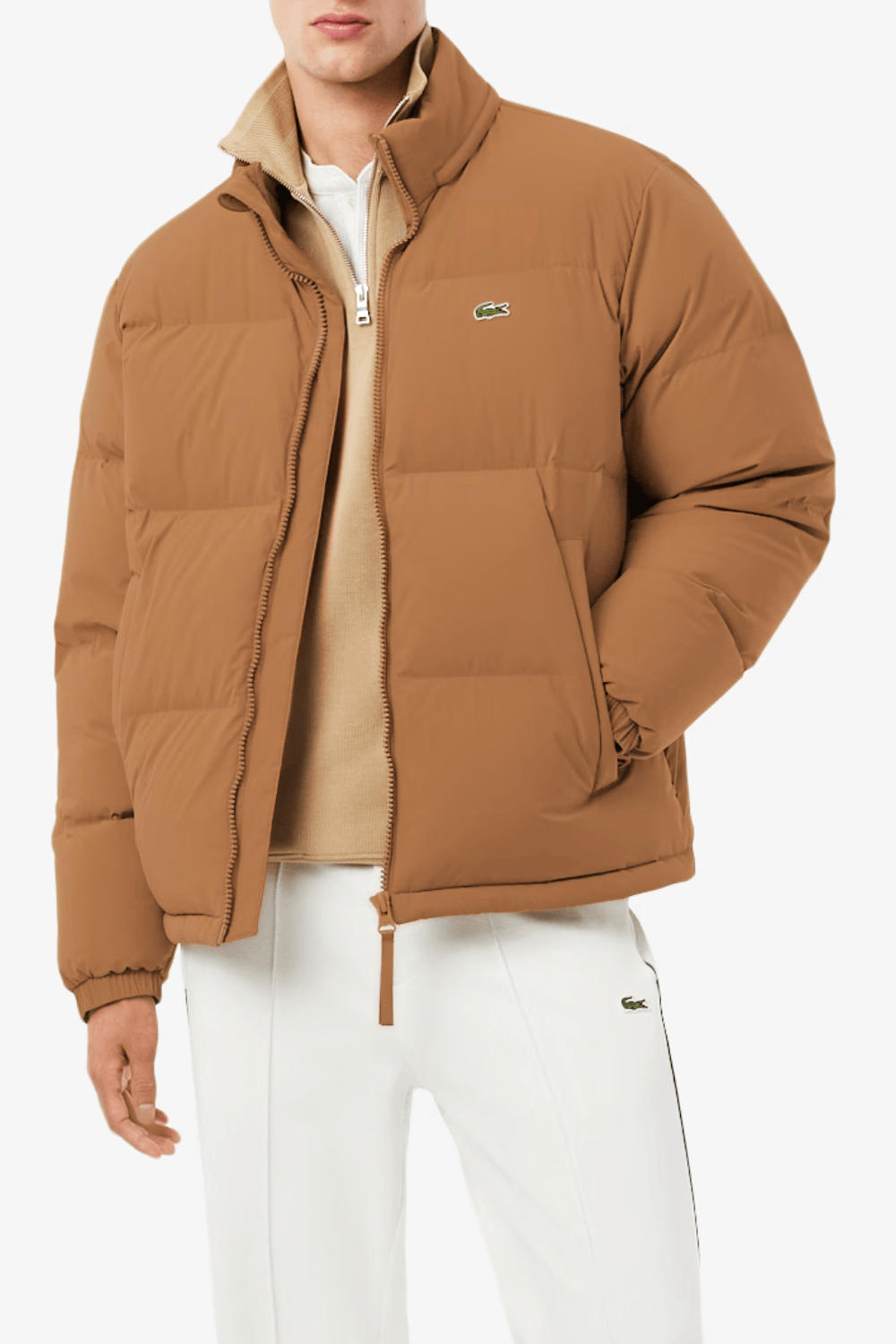
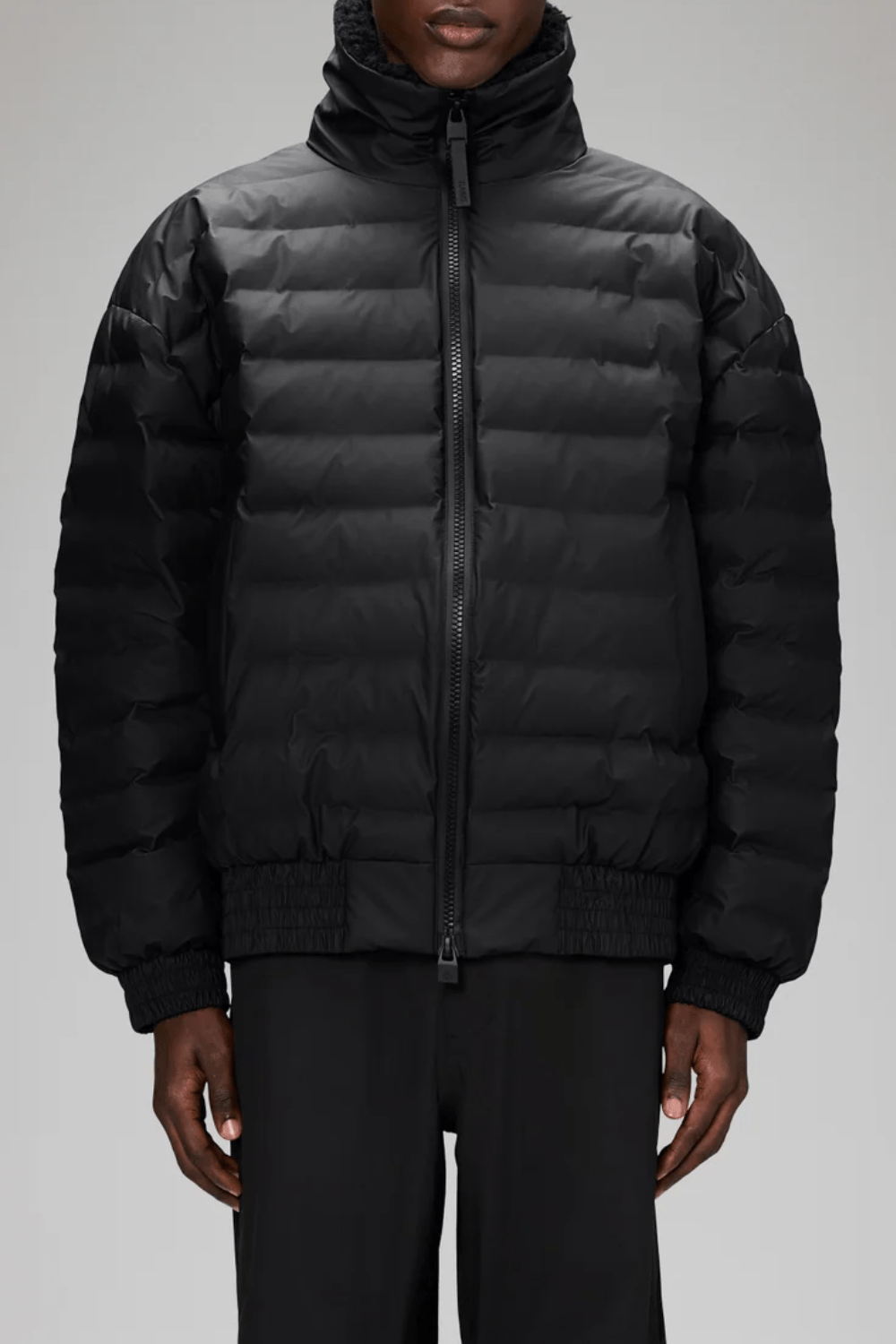
More Worth-Checking-Out Puffer Jackets
How to Choose Your Puffer Jacket
Okay. You’ve seen 10 great options.
But how do you actually decide which one is right for you?
Here are a couple of key factors that would help you choose.
1. Insulation Types
Down or synthetic?
Down Insulation
Down comes from geese or ducks, specifically, the soft, fluffy undercoating beneath their feathers. It’s nature’s best insulator.
Pros:
- Superior warmth-to-weight ratio (nothing beats it)
- More compressible (packs smaller)
- Lasts longer with proper care (10+ years)
- More breathable than synthetic
Cons:
- Loses all insulating power when wet
- Expensive (quality down is pricey)
- Requires more careful washing and storage
- Ethical concerns (though RDS certification helps)
Synthetic Insulation
Synthetic fills (polyester fibers) mimic down’s structure but use man-made materials.
Pros:
- Works when wet (maintains 70-80% of warmth)
- Dries faster than down
- More affordable
- Hypoallergenic (great if you have allergies)
Easier to care for
Cons:
- Heavier for equivalent warmth
- Bulkier (doesn’t compress as well)
- Shorter lifespan (3-5 years before loft degrades)
If you care about weight and packability, and you live somewhere with cold but mostly dry winters, go with a down puffer.
If your winters are wet and cold, or you’re budget-conscious, synthetic insulation makes more sense.
Choose based on your climate and your budget. Those two things matter the most.
2. Fill Power & Fill Weight
Fill power
You see numbers like “700-fill down” or “1000-fill down” everywhere, including this post. So, what is that?
Fill power measures how much space one ounce of down occupies when fully expanded (lofted).
In simple terms, fill power tells you how fluffy/loafty the down is.
Think of down like popcorn.
You have a cup, and you need to fill it with popcorn.
- Low fill power is like flat popcorn —> you need a lot of it to fill the cup
- High fill power is like big, airy popcorn —> you need less to fill the same cup
Why is the fill power important?
Because higher fill power down:
- Traps more air (and trapped air is what keeps you warm)
- Weighs less
- More packable
So a jacket with 800-fill down can be just as warm as a jacket with 600-fill down, but feel lighter and less bulky— as long as it uses the right amount of down.
So, how do those numbers actually translate in real life?
- 550-650 fill: Decent warmth, but heavier and bulkier. Fine for budget options or casual, everyday wear
- 700-750 fill: The sweet spot for most people. Best balance of warmth, weight, and cost
- 800-850 fill: Very warm, lighter, and more packable. This is where jackets start to feel high-quality
- 900-1000 fill: Maximum warmth for minimum weight. Premium, ultralight. Great for a serious cold or weight-conscious people.
But here’s the catch: fill power alone isn’t enough.
Fill Weight Also Matters
Higher fill power does not always equal greater warmth.
A jacket with 800-fill power and 3 ounces of down will be less warm than a jacket with 600-fill power and 6 ounces of down.
Why?
Because, at a basic level, total warmth ≈ fill power × fill weight.

Note: This is a simplified way to think about warmth. In the real world, the warmth of a puffer jacket is also affected by:
- Baffle design (stitched vs. box-baffled)
- Jacket fit (tight jackets lose heat faster)
- Shell fabric (wind resistance matters)
- Construction quality
- How evenly the down is distributed
Higher fill power means you need less down to achieve the same warmth. That’s why ultralight jackets use 900-1000 fill—they can use less material and save weight.
For real-world comparison:
- Lightweight jackets: 3-5 oz of down fill
- Mid-weight jackets: 5-7 oz of down fill
- Heavy-duty jackets: 7-10+ oz of down fill
3. Temperature Ratings
There’s no universal standard for puffer jacket temperature ratings.
Unlike sleeping bags (which use EN/ISO testing standards), jacket brands make up their own numbers. One brand’s “rated to 20°F” might be another brand’s “rated to 0°F.”
Plus, your metabolism, how active you are, and what you’re wearing underneath all change how warm a jacket feels.
General guidelines (for average person, low activity):
- Lightweight (3-5 oz fill): Comfortable from 40°F to 25°F
- Mid-weight (5-7 oz fill): Comfortable from 25°F to 0°F
- Heavy-duty (7-10+ oz fill): Comfortable from 0°F to -40°F
Adjust warmer if you’re:
- Moving around (hiking, skiing)
- Wearing heavy layers underneath
- Naturally run hot (faster metabolism)
Adjust colder if you’re:
- Standing still (belaying, spectating)
- Wearing minimal layers
- Naturally run cold (slower metabolism)

Pro tip: Most people are better off with a mid-weight jacket plus a good base layer system than a single heavy jacket.
4. Fit & Sizing
Puffer jackets generally come in three fit styles: slim/athletic, regular/standard, and boxy/oversized.
Slim/athletic fit puffers are made for technical use. They sit closer to the body and work well as a mid-layer under a shell. Best for active situations like skiing or climbing.
Regular/standard fit puffers have enough room for light to medium layering. This is the most versatile option and works best for everyday wear.
Boxy/oversized puffers give you plenty of room for heavier layers. They’re more casual and lean toward a streetwear or fashion-forward look.
Sizing matters too.
If you plan to wear thick sweaters or fleeces underneath, consider sizing up. If you want a cleaner look or plan to use the jacket as a mid-layer, stick with your normal size.
Also, check shoulder mobility. Raise your arms. If the jacket rides up or feels restrictive, it’s probably too small.
Length matters as well. Hip-length jackets are the most versatile. Longer cuts work better for extreme cold. Shorter, bomber-style puffers are more fashion-focused.
5. Durability
Durability mostly comes down to the shell fabric, specifically the denier (D) rating.
Denier is a measurement of how thick and strong the yarns in the fabric are.
Higher number = thicker fibers = tougher fabric.
Lower number = thinner fibers = lighter, but more fragile.
10D-15D fabric: Ultralight but delicate. Will snag easily on branches, backpack straps, Velcro, or rough surfaces. Fine if you’re careful with your gear. Not great if you’re hard on jackets.
20D-30D fabric: Good balance of weight and durability. Most versatile option for everyday wear. You still get a lightweight, packable jacket, but with enough toughness to handle daily wear, travel, and light outdoor use.
40D+ fabric: Very durable. Heavier and less packable but nearly indestructible. You’ll see it on more technical jackets that are for climbing, skiing, or harsh environments where durability matters more than saving weight.
6. Build Features
Features of a puffer jacket matter, too.
Here are some must-have and nice-to-have features.
Must-Have Features:
Quality Zippers – YKK is the gold standard. Cheap zippers fail first. Two-way zippers let you vent from the bottom (huge for active use).
Multiple Pockets – Handwarmer pockets (minimum). Internal security pocket for valuables. Bonus: chest pocket that doubles as a stuff sack.
Adjustable Hem/Cuffs – Elastic or drawcord adjustments seal out cold air. Elastic cuffs are simpler; adjustable cuffs are more versatile.
DWR Coating – Durable Water Repellent treatment makes water bead up and roll off. Essential for down jackets (since down fails when wet).
Nice-to-Have Features:
Packability/Stuff Sack – Matters for travelers and backpackers. Less important for daily commuters.
Pit Zips – Ventilation zippers under arms. Overkill for most people, but great for aerobic activities.
Interior Media Pockets – Keeps phone warm and secure, keeping the battery from dying faster in cold weather, so this helps.
Removable Hood – Adds versatility but adds weight and potential failure points.
Care & Maintenance
Down Jacket
Storage: Don’t keep it compressed for too long. Hang it in a closet or store loosely in a large bag. Down compresses well, but keeping it squished for months slowly kills its loft (and loft = warmth).
Washing: Don’t wash too often (1-2 times per season max). Use a down-specific detergent. and a gentle cycle. Rinse a couple of times to make sure all the soap is out, because leftover soap makes the down clump together and prevents it from lofting (fluffing up).
Drying: Tumble dry on low heat with 2–3 clean tennis balls. The tennis balls break up clumps of down and help it dry evenly. This can take a while, sometimes 2–3 hours, but don’t rush it. The jacket must be completely dry before storage. Damp down leads to mildew, and that can permanently ruin the jacket.
DWR Treatment: Reapply a water-repellent spray about once a year. Wash the jacket first, apply the spray while it’s still damp, then dry it completely to set the treatment.
Synthetic Jackets
Much easier to deal with.
Machine wash with regular detergent, tumble dry on low. No special detergents, no tennis balls, no stress.
Synthetic insulation also won’t be damaged if you store it compressed.
Conclusion
Don’t get distracted by fill power specs alone. Consider all 8 aspects we covered: insulation, materials, weather protection, weight, fit, construction, versatility, and value.
Budget options like the Decathlon Simond can deliver 80% of premium performance at 25% of the cost.
Premium options like the Arc’teryx Thorium or Rab Mythic G offer premium quality and more advanced features that are great if you’ll actually use them.
Whether you’re spending $119 or $525, every jacket in this guide represents genuine value in its category. I’ve done the research, compared the specs, and broken down what actually matters.
Hopefully, this helps you find the puffer jacket that fits your needs. Stay warm out there.
Some of the links on this page are affiliate links. This means if you click and make a purchase, we may earn a small commission at no extra cost to you. We only recommend products we genuinely like and think you’ll enjoy.