Best Fitness Watches for Men: 10 Picks for Every Need
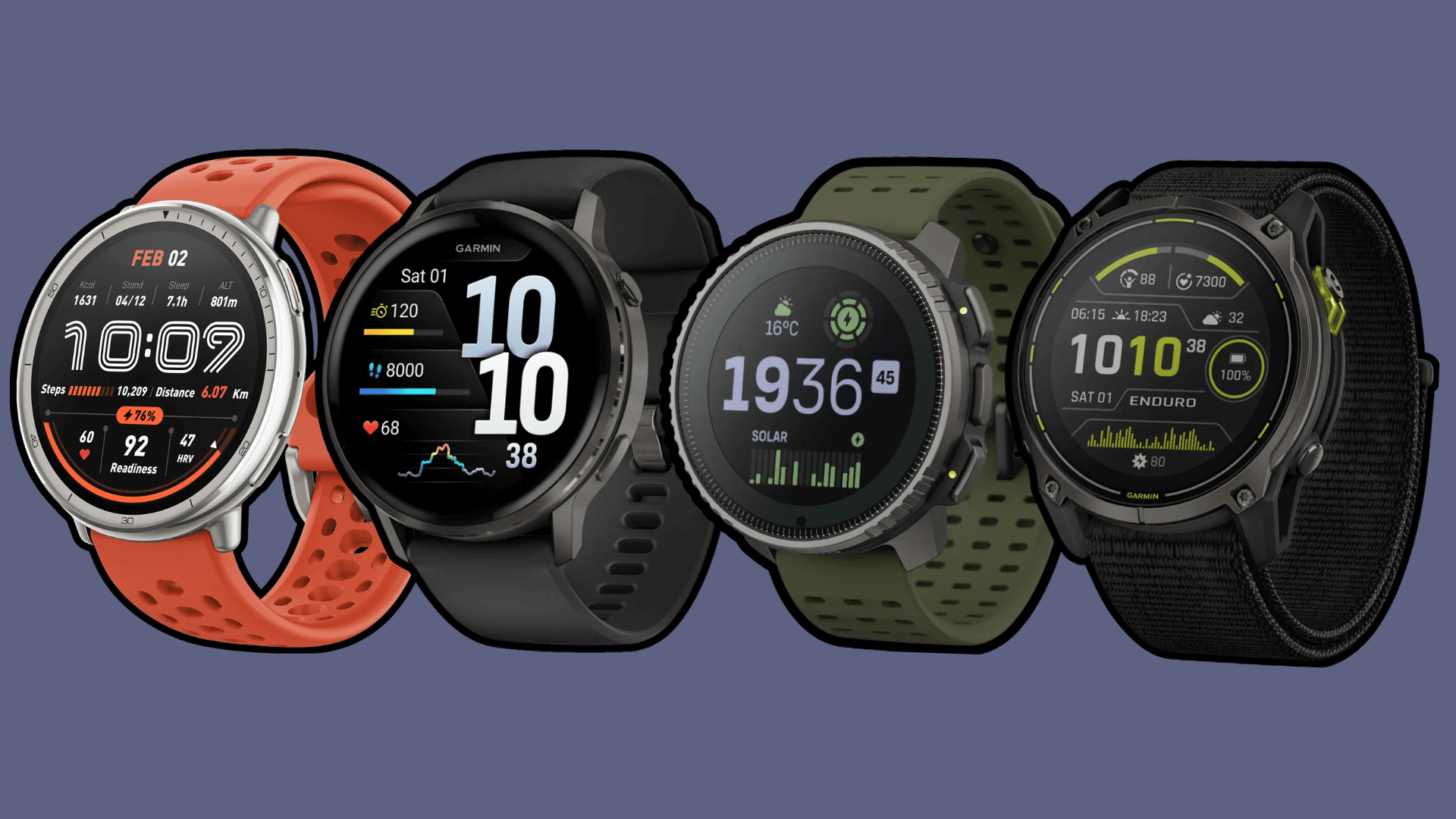
Fitness watches used to be glorified step counters. Now they track your heart rate, sleep, recovery, workouts, and just about everything in between.
And the options are all over the place. On one end, you have slim fitness trackers built for everyday health. On the other, you have rugged watches designed to survive multi-day trips into the backcountry.
That makes choosing one harder than it looks.
A watch that’s great for running isn’t necessarily great for swimming. The best everyday smartwatch may not have enough battery for a weeklong hike. And the watch with every feature imaginable might be complete overkill if all you want is better workout tracking.
This guide breaks down the best fitness watches for men by specific needs, including running, swimming, weight lifting, outdoor activities, everyday fitness, and long battery life.
Whether you’re training for a marathon, spending weekends on the trail, or just trying to get more out of your workouts, there’s an option here that makes sense for how you train.
What Makes a Good Fitness Watch
Before getting into the picks, here’s what separates a genuinely good fitness watch from one that’s mostly riding on a flashy spec sheet.
- Accurate activity and workout tracking
- Reliable heart-rate and health monitoring
- Accurate GPS
- Battery life that fits your training routine
- Durable, well-built construction
- Comfortable design you can actually wear all day
- Smart features that add something useful
- Compatibility with your phone
- Good value for the price
No watch gets everything right. That’s the point.
So instead of looking for one “best” fitness watch, this guide focuses on what each watch actually does well.
Below are the best fitness watches for men worth buying right now.
10 Best Fitness Watches for Men
1. Best Overall Fitness Watch — Garmin Venu 4
Key Specs:
- Case: 41mm stainless steel bezel + fiber-reinforced polymer
- Display: 1.2″ AMOLED with optional always-on mode
- Water resistance: 5 ATM
- Battery: Up to 10 days in smartwatch mode
- Weight: 33g (case only)
- Compatibility: iPhone and Android
Pros & Cons:
Pros:
- Handles 80+ sport profiles, from running and cycling to swimming and strength training
- Tracks more than just workouts, with Body Battery, HRV Status, Pulse Ox, and ECG
- Sleep coaching helps you understand your sleep and set better recovery targets
- Lightweight 41mm case with a bright 1.2″ AMOLED display
- Built-in LED flashlight and on-wrist calling make it useful outside the gym, too
Cons:
- Not the best choice for extreme outdoor adventures
- 10-day battery life is good, but some fitness watches last considerably longer
- Some advanced coaching and nutrition features require Garmin Connect+
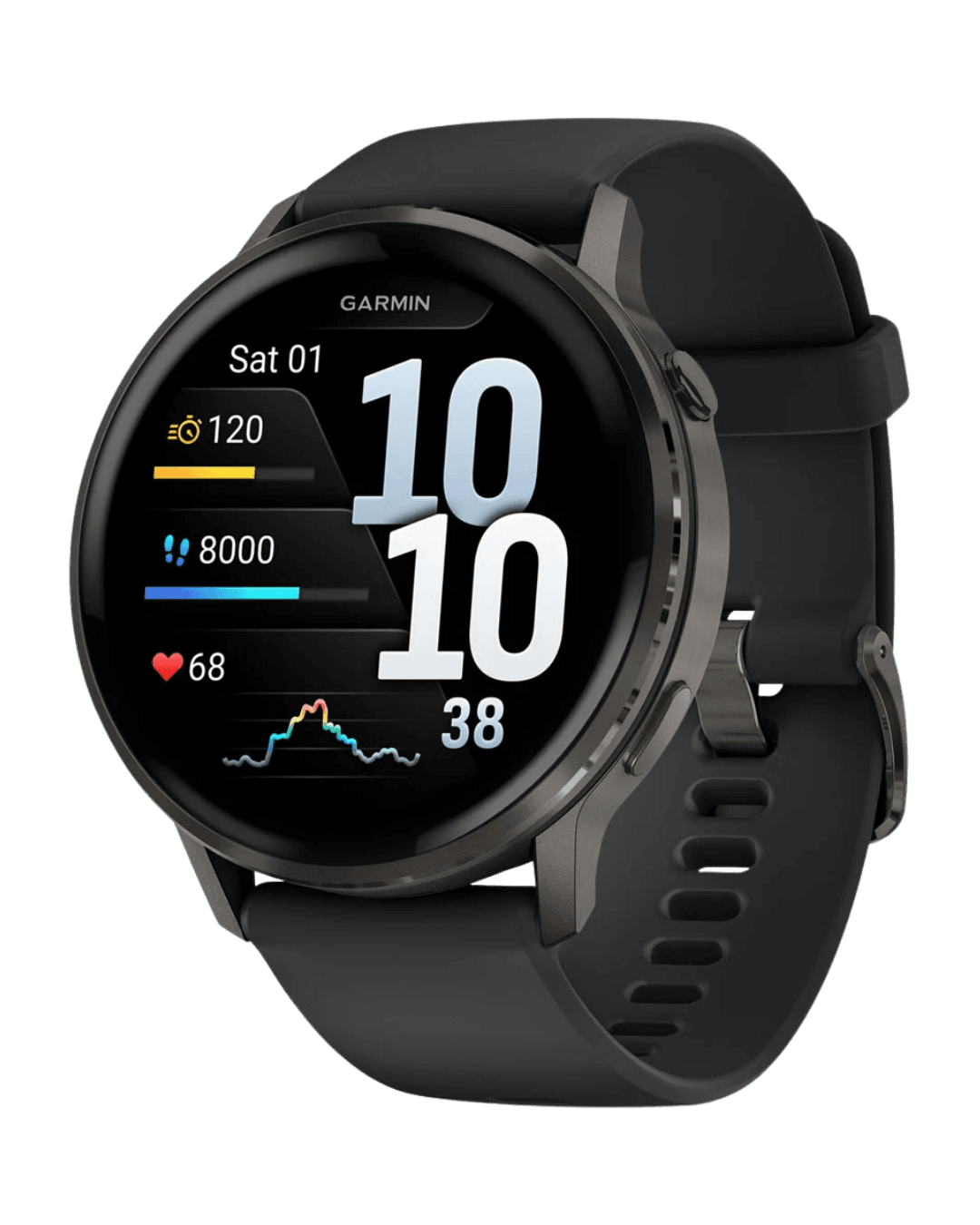
The Venu 4 earns “best overall” for one simple reason: it doesn’t force you to choose between a fitness watch and an everyday smartwatch.
You can use it for serious workouts. Track your recovery. Monitor your sleep. Then wear it to work without looking like you just left the gym.
That’s a harder balance to get right than it sounds.
For starters, the Venu 4 supports 80+ sport profiles. So you’re not locked into running or cycling just because that’s what the watch was designed around. You can switch between strength training, swimming, hiking, and dozens of other activities without changing devices.
But the real strength is what happens between workouts.
Garmin packs the Venu 4 with health and recovery tools that help put your training into context. Body Battery gives you a quick read on your energy levels, while HRV Status and sleep coaching help you understand whether you’re actually recovering from your workouts.
And that makes the Venu 4 more useful than a watch that simply tells you how many calories you burned.
Here’s another thing I like about it: Garmin didn’t make it look like a piece of sports equipment.
The 41mm case weighs just 33g, and the AMOLED display is bright and sharp. You can wear it during a workout, keep it on while running errands, and still feel perfectly comfortable wearing it with a nicer outfit.
The small smartwatch features help here, too. The built-in LED flashlight is one of those features you don’t think you need until you actually use it. And being able to take calls from your wrist makes the Venu 4 feel much more like an everyday smartwatch.
Of course, there’s a catch.
The Venu 4 isn’t the watch I’d pick for extreme outdoor adventures. And its 10-day battery life, while good, isn’t going to impress someone coming from a dedicated long-battery fitness watch.
But that’s not really the point.
If you’re spending most of your time training at the gym, running around town, tracking your sleep, and living a normal life between workouts, the Venu 4 makes a lot of sense.
At $550, it’s definitely an investment. But you’re getting one watch that covers fitness, recovery, health, sleep, and everyday smartwatch duties without being particularly weak in any of those areas.
That’s what makes it the best overall.
Best For: Men who want one fitness watch that can handle workouts, health tracking, sleep, and everyday wear without specializing too heavily in one area.
2. Best Budget Fitness Watch — Amazfit Active 2 (Round)
Key Specs:
- Case: 44mm stainless steel bezel + polymer frame
- Display: 1.32″ AMOLED
- Water resistance: 5 ATM
- Battery: Up to 10 days typical use; up to 21 hours GPS
- Compatibility: iPhone and Android
Pros & Cons:
Pros:
- Excellent feature set for the price
- Bright 1.32″ AMOLED display with up to 2,000 nits
- Stainless steel case gives it a premium feel
- Offline maps with turn-by-turn navigation
- Zepp Flow AI voice assistant for hands-free control
Cons:
- Less advanced training and recovery data than pricier rivals
- Build quality can’t match higher-end fitness watches
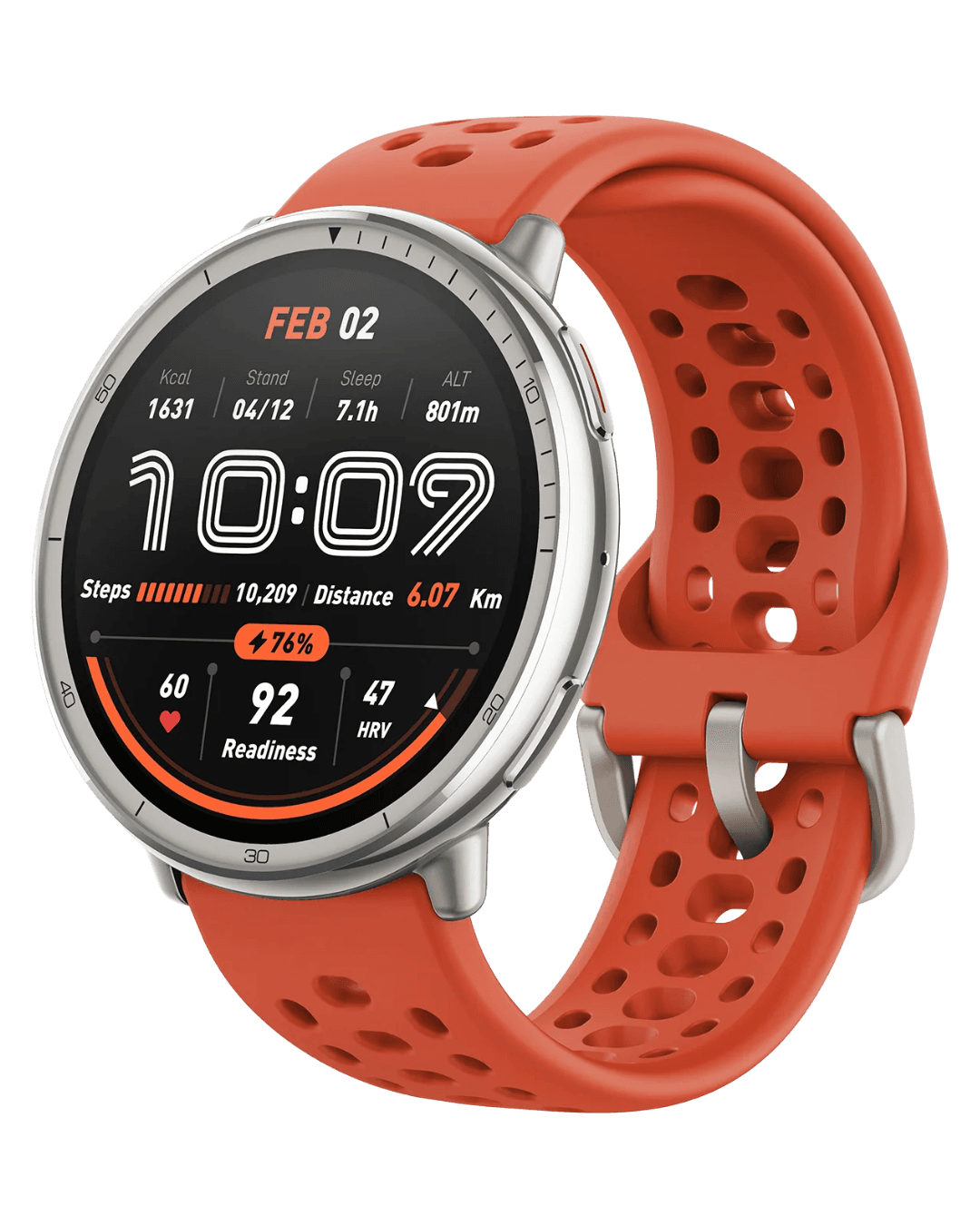
The Active 2 makes a pretty convincing case for spending less on a fitness watch.
The reason isn’t that it has every feature under the sun. It doesn’t. It’s that the features it does have make the watch feel much more expensive than its $100 price tag.
Take the build. The stainless steel case gives the Active 2 a more premium feel than you’d expect at this price. And the AMOLED display is bright enough to stay readable outside, even in direct sunlight.
But here’s where things get interesting.
The Active 2 gives you offline maps with turn-by-turn navigation. That’s a feature I wouldn’t expect to see on a $100 fitness watch. If you run, hike, or cycle regularly, you can follow a route from your wrist instead of reaching for your phone every time you need to check where you’re going.
Battery life fits the same philosophy. With up to 10 days of typical use, you can wear it throughout the week without making charging another thing to remember.
And there are a few nice extras, like Zepp Flow, that make the watch feel more like a full-fledged smartwatch than a basic fitness tracker.
Of course, you give up some things to get that price. You won’t get the same depth of training and recovery data found on higher-end Garmin watches.
But that’s the trade-off.
If you want advanced training analytics, there are better options. If you want a good-looking everyday fitness watch with useful navigation, long battery life, and a premium feel for around $100, the Active 2 is tough to beat.
Best For: Men who want a premium-looking fitness watch with useful navigation and strong everyday tracking, without spending $300 or more.
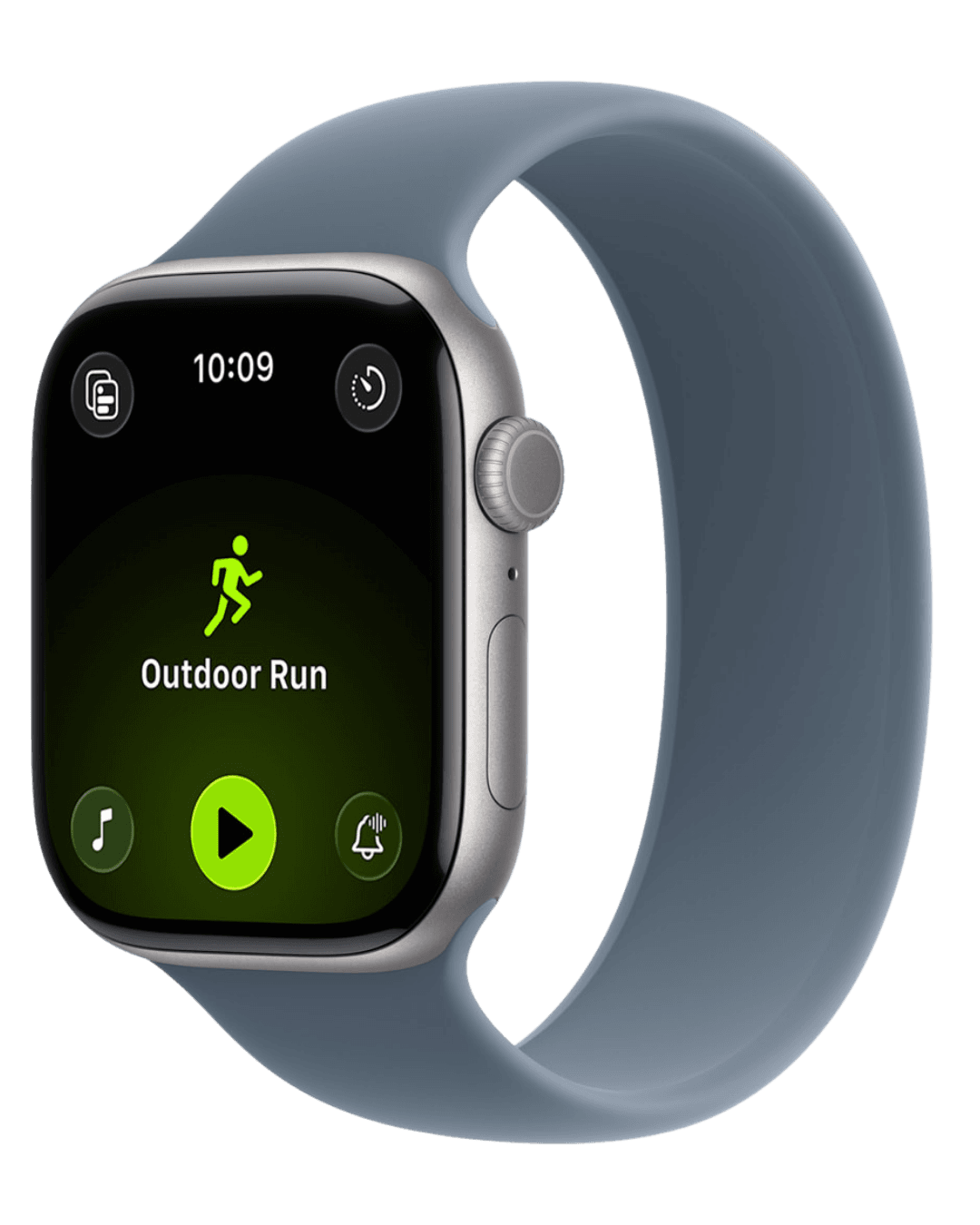
3. Best Everyday Fitness Watch — Apple Watch Series 11
Key Specs:
- Case: Aluminum or titanium, 42mm or 46mm
- Display: Always-on LTPO OLED; Ion-X glass on aluminum, sapphire crystal on titanium
- Water resistance: WR50; IP6X dust resistance
- Battery: Up to 24 hours
- GPS: L1 GPS, GLONASS, Galileo, QZSS, BeiDou
- Weight: From 30.3g (42mm aluminum)
Pros & Cons:
Pros:
- The deepest iPhone integration of any watch here, with calls, texts, apps, payments, and notifications all working seamlessly
- Tougher display glass that’s 2x more scratch-resistant than the Series 10
- Swimproof to 50m with automatic workout detection
- Huge app ecosystem with Apple Fitness+ built in
Cons:
- 24-hour battery life still falls well short of dedicated fitness and outdoor watches
- Requires an iPhone and doesn’t work with Android
- Not designed for multi-day outdoor adventures
If you use an iPhone every day, the Series 11 is hard to beat for everyday fitness.
The reason isn’t that it’s the most advanced fitness watch here. It’s that nothing else combines workouts and everyday life quite as seamlessly.
You can answer a call, reply to a text, pay for coffee, then start a workout without changing devices. The huge app ecosystem and Apple Fitness+ make it even more useful once you’re back at home.
It’s also a better fitness companion than the old Apple Watch stereotype suggests. Automatic workout detection makes tracking easy, while sleep and heart-health features cover the things you actually want to monitor between workouts. And with 24 hours of battery life, you can get through a full day with a workout thrown in without immediately reaching for the charger.
The tougher display helps, too. Being 2x more scratch-resistant than the Series 10 matters when your wrist regularly meets gym equipment, door frames, and everything else you manage to bump into.
You can swim with it, too. But don’t confuse “swimproof” with “adventure watch.” The 24-hour battery still makes multi-day outdoor trips a poor fit.
For everyday wear, though, that’s not really the point. If you’re an iPhone user who wants fitness tracking without giving up the best smartwatch experience, the Series 11 gets the balance right.
Best For: iPhone users who want one watch for calls, texts, workouts, and everyday health tracking without carrying a separate device.
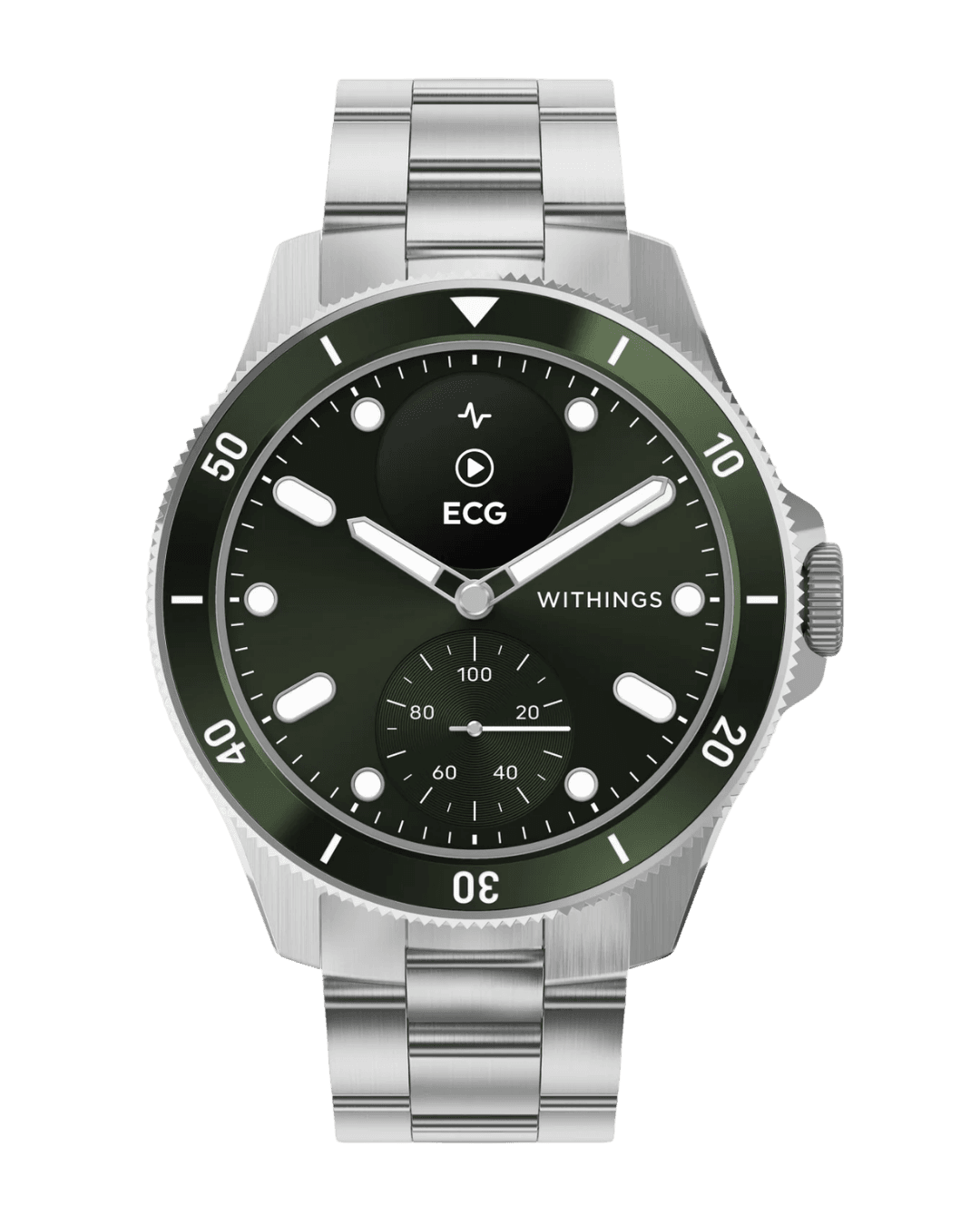
4. Best Hybrid Fitness Watch — Withings ScanWatch Nova
Key Specs:
- Case: 42mm stainless steel, mirror-polished and brushed
- Glass: Sapphire crystal with anti-reflective coating
- Water resistance: 10 ATM / 100m
- Battery: Up to 35 days
- Bezel: Unidirectional rotating ceramic + stainless steel
Pros & Cons:
Pros:
- Looks and wears like a traditional analog watch rather than a fitness gadget
- Up to 35 days of battery life, far beyond most full-featured smartwatches
- Medical-grade ECG plus 24/7 heart-rate and HRV tracking
- Premium stainless steel case with sapphire crystal glass
- Readiness score turns overnight health data into a simple recovery snapshot
Cons:
- No touchscreen or app grid, so smart features are much more limited than Apple or Garmin
- 40+ workout modes aren’t enough for serious multi-sport athletes
- $600 is a lot to spend on a watch that’s primarily focused on health tracking
The ScanWatch Nova is for people who want the health tracking of a fitness watch without the look of one.
That’s the whole appeal. At first glance, it looks like a proper analog watch. The polished stainless steel case, sapphire crystal, and rotating ceramic bezel don’t exactly scream “fitness tracker.” But underneath that traditional design, you get serious health monitoring, including ECG, 24/7 heart rate, HRV, and sleep tracking.
And you don’t have to charge it every night.
The Nova can run for up to 35 days, which is one of its biggest advantages over a typical smartwatch. That makes it much easier to wear continuously, especially if you actually want the overnight data to be useful.
The Readiness score is particularly interesting. Instead of throwing a pile of health metrics at you, it turns overnight data like HRV, temperature, sleep, and breathing into a simpler picture of how your body is doing.
The trade-off is that this isn’t trying to be a Garmin or Apple Watch. There’s no touchscreen, no app grid, and fewer workout modes. If you want detailed training data or a watch that can handle every type of workout, you’ll probably want something else.
But if your priority is health tracking rather than smartwatch features, that’s hardly a deal-breaker.
At $600, the Nova is expensive for a watch with relatively limited smart features. But you’re paying for something most fitness watches can’t offer: serious health tracking in a watch that still looks like a watch.
Best For: Men who want serious health tracking and long battery life without wearing a watch that looks like a fitness gadget.
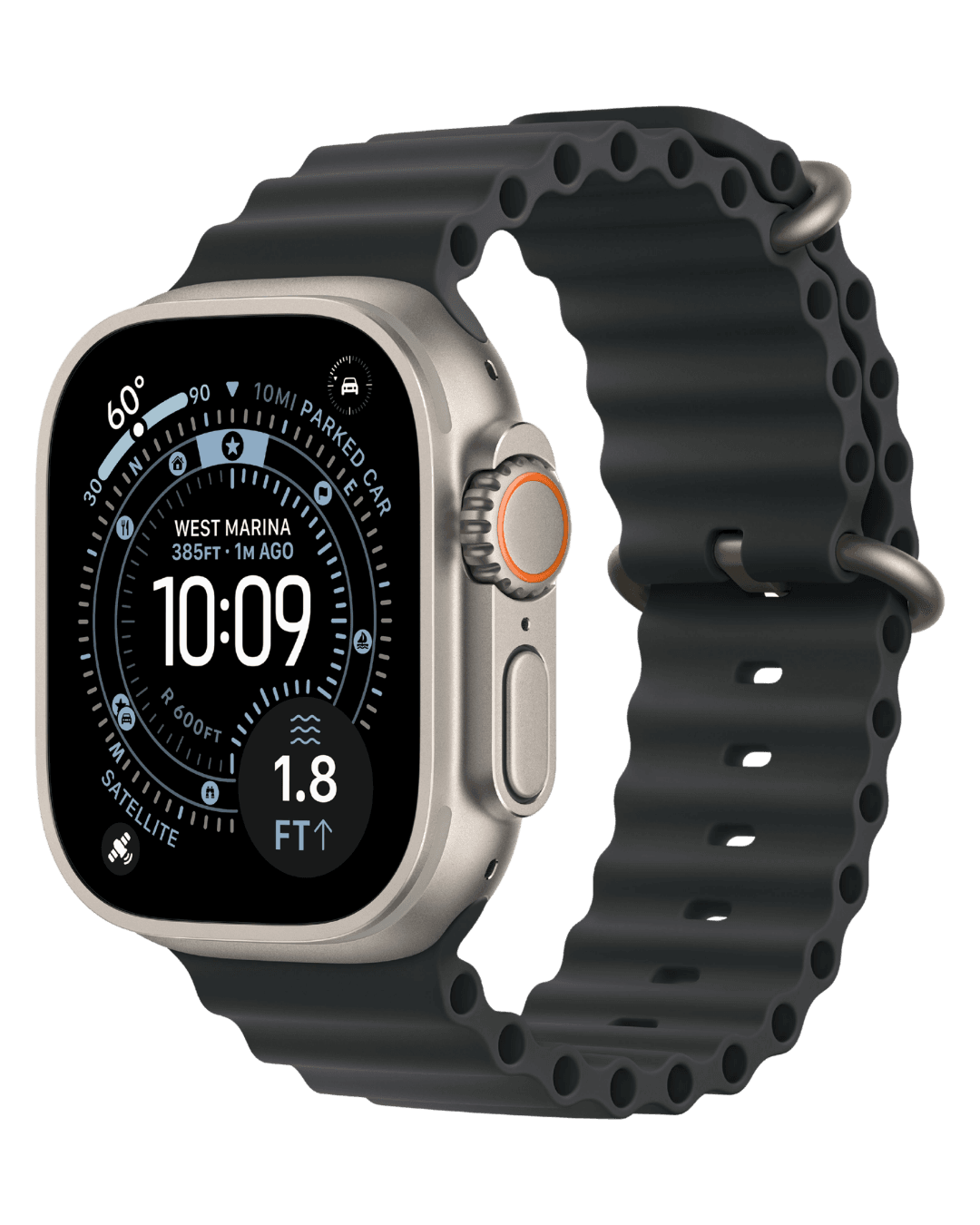
5. Best Upgrade Fitness Watch — Apple Watch Ultra 3
Key Specs:
- Case: Aerospace-grade titanium
- Display: Wide-angle OLED with flat sapphire crystal
- Water resistance: WR100; suitable for recreational diving to 40m
- Battery: Up to 42 hours normal use; up to 14 hours full GPS + heart-rate outdoor workout
- GPS: Dual-frequency L1 + L5; GLONASS, Galileo, QZSS, and BeiDou
Pros & Cons:
Pros:
- Apple’s biggest and brightest display yet, making workout data easy to read at a glance
- Up to 42 hours of battery life, nearly twice the standard Series 11
- Aerospace-grade titanium case with WR100 water resistance for diving and water sports
- Dual-frequency GPS for more accurate positioning in challenging environments
- Full Apple ecosystem integration with satellite connectivity for added backcountry coverage
Cons:
- $799 price tag puts it well above most dedicated sports watches
- Works only with iPhone
- Larger and heavier than a standard Apple Watch, especially noticeable on smaller wrists
The Ultra 3 is the Apple Watch for people who have started asking more from their watch.
The standard Apple Watch is great for everyday workouts. But once you’re spending longer hours outside, battery life becomes a real limitation. The Ultra 3 gets you up to 42 hours, which makes a big difference on long training days and weekend trips.
The extra size isn’t just for show, either. The titanium case and WR100 water resistance make it suitable for diving and serious water sports. But if you’re mostly running around town, that larger, heavier case can feel like more watch than you need.
The display is where the size pays off again. It’s bright enough to check your pace or route at a glance while running or cycling, and the sapphire crystal gives it better protection when you’re taking it somewhere rougher than the gym.
GPS performance is another reason to upgrade. The dual-frequency system is designed for more accurate positioning in difficult areas, while satellite connectivity gives you a backup when you’re beyond normal coverage.
And you still get the Apple Watch experience. Calls, texts, apps, and payments all work seamlessly with your iPhone.
That’s really the appeal. The Ultra 3 doesn’t replace the Apple Watch with a hardcore fitness computer. It takes the Apple Watch you already know and makes it much more capable outdoors.
At $799, that’s a lot to pay if you only need basic fitness tracking. But for an iPhone user who trains hard, spends time outside, and wants more battery and durability, the upgrade is easy to understand.
Best For: iPhone users who want Apple Watch convenience with significantly better battery life, outdoor durability, and GPS performance for serious training and adventure.
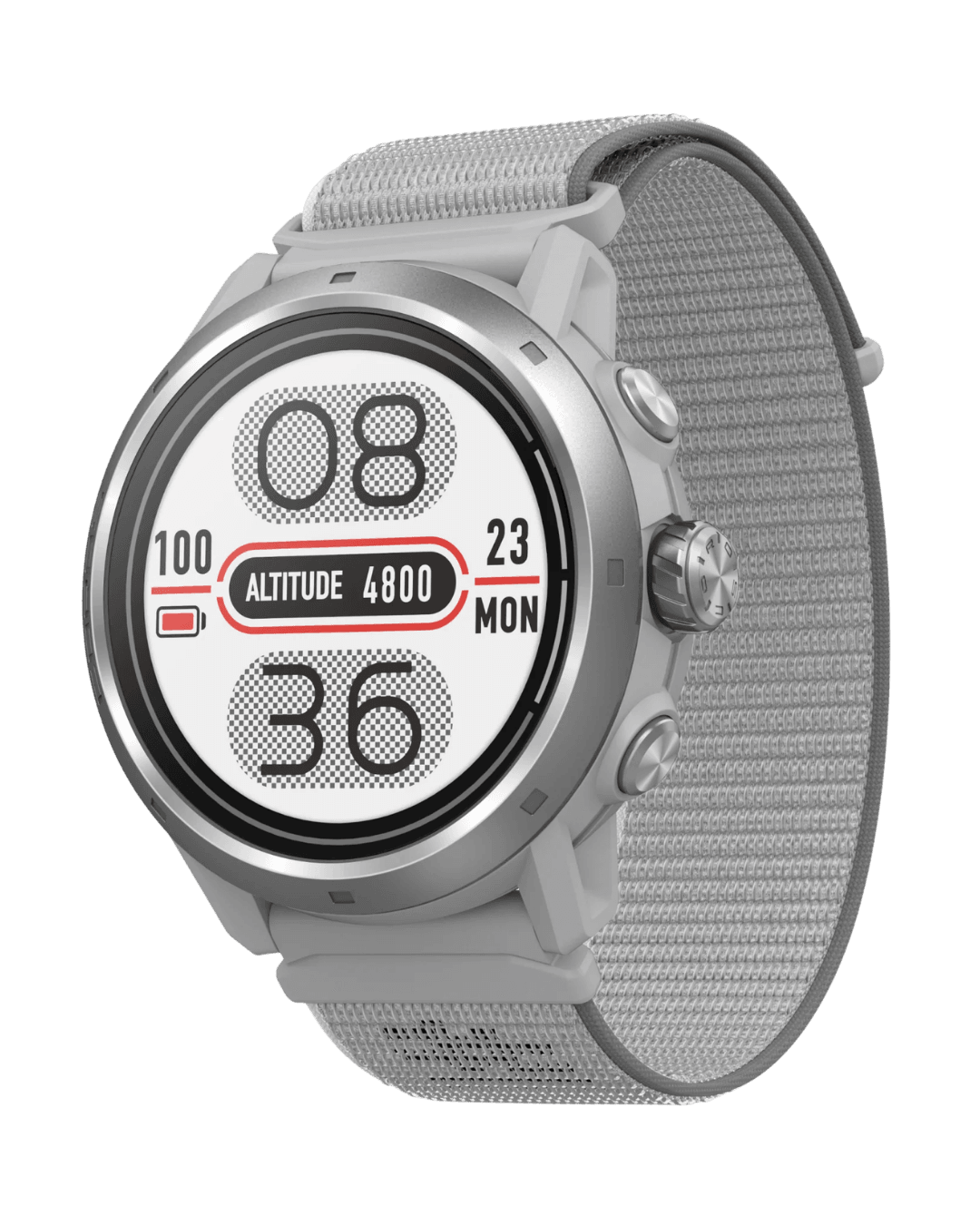
6. Best Fitness Watch for Running — Coros Apex 2 Pro GPS Watch
Key Specs:
- Case: Grade 5 titanium bezel with PVD coating, titanium alloy cover
- Display: 1.3″ sapphire touchscreen, always-on memory LCD
- Water resistance: 5 ATM
- Battery: Up to 21 days regular use; up to 66 hours full GPS
- Storage: 32GB
- Weight: 53g with nylon band / 66g with silicone band
Pros & Cons:
Pros:
- Up to 66 hours of full GPS battery life, giving serious runners plenty of room for long training blocks and races
- Sapphire glass and a titanium bezel built to take daily training abuse
- COROS EvoLab training insights for tracking training load, recovery, and progress
- Automatic rep and set counting for strength sessions
- Free offline topographic maps for trail running and route navigation
Cons:
- The 1.3″ display is less sharp than the AMOLED screens found on newer rivals
- Fewer everyday smartwatch features, including no contactless payments
- EvoLab’s structured training tools can take some time to learn
The Apex 2 Pro is built around a simple idea: your watch shouldn’t become the limiting factor in your training.
That’s especially true when you’re logging serious mileage. Up to 66 hours of full GPS battery life means you can head into a long training block, race, or multi-day adventure without constantly worrying about where you’ll find a charger.
COROS also puts a lot of emphasis on what happens between runs. EvoLab tracks training load and recovery, then turns that information into something you can actually use when planning your next workout. There’s a learning curve if you’re new to structured training, but that’s part of the appeal for runners who want more than basic pace and distance data.
The hardware is ready for the same kind of abuse. Sapphire glass and a titanium bezel can take daily knocks without requiring you to baby the watch, while the free offline topographic maps make the Apex 2 Pro a much more interesting option once your runs leave the pavement.
And when you’re not running, it still has some tricks. Automatic rep and set counting makes strength sessions easier to track, so cross-training doesn’t mean switching watches.
The biggest compromise is the display. The always-on memory LCD isn’t nearly as vibrant or sharp as an AMOLED screen, and the lack of contactless payments limits its usefulness as an everyday smartwatch.
But if running is the priority, those are pretty easy compromises to make for this much battery life and training depth.
Best For: Serious runners who want long GPS battery life, detailed training tools, and reliable navigation without charging their watch every other day.
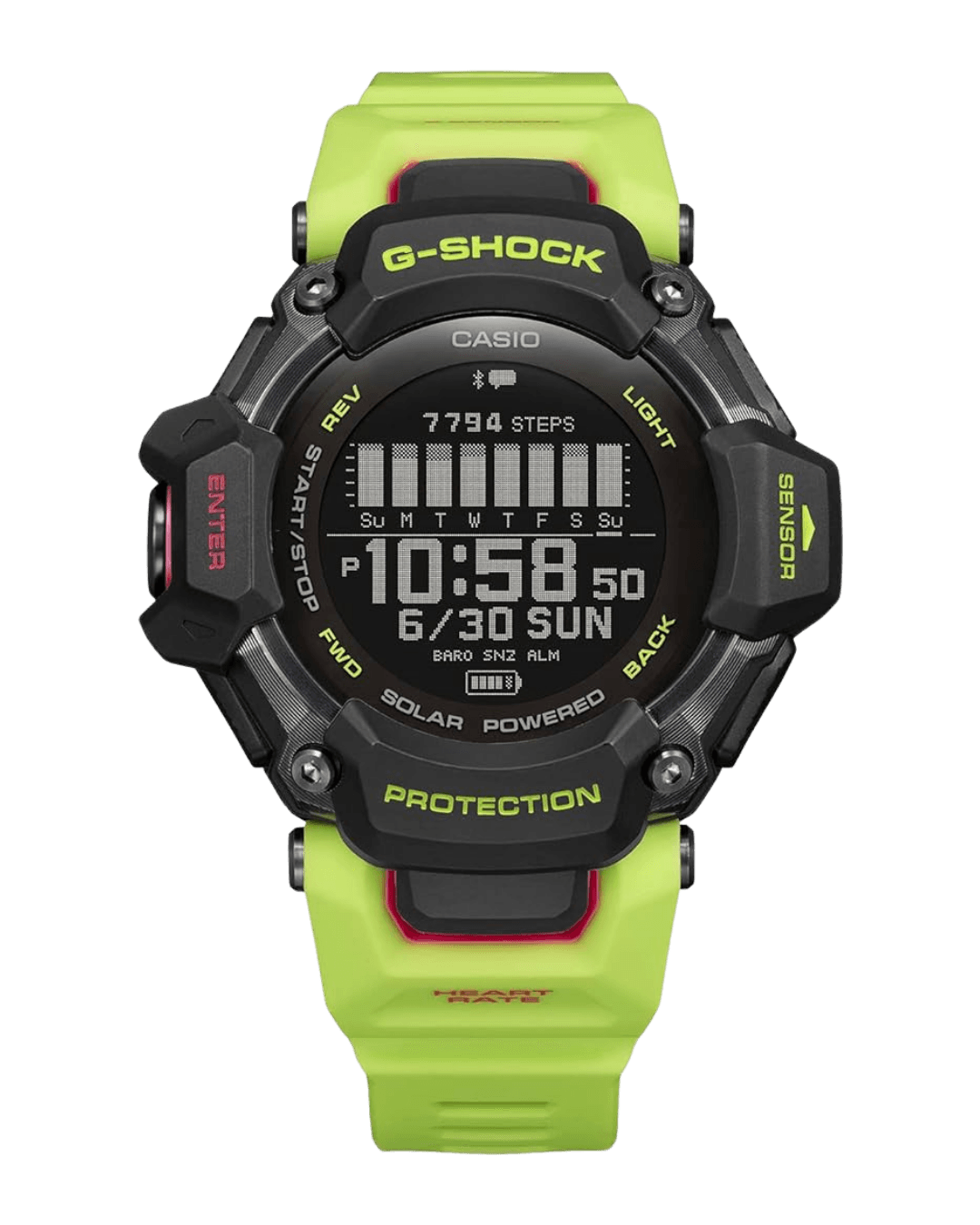
7. Best Fitness Watch for Swimming — Casio G-Shock GBD-H2000
Key Specs:
- Case: Carbon-reinforced resin case back with bio-based resin bezel and band
- Water resistance: 200m
- Weight: 63g
- Sensors: Optical heart rate, compass, altimeter/barometer, thermometer, accelerometer, gyroscope
- Battery: Solar-assisted timekeeping; USB charging for GPS and training features
Pros & Cons:
Pros:
- Built-in gyroscope tracks swim strokes and turns in both pool and open water
- 200m water resistance with the rugged construction G-Shock is known for
- Six onboard sensors cover heart rate, GPS, compass, altitude, temperature, and movement
- Polar-powered training analysis adds useful heart-rate-based insights
- Bio-based resin bezel and band keep the rugged design relatively light
Cons:
- Digital display isn’t as vivid or easy to read as the AMOLED screens on many rivals
- Limited smartwatch features, with no payments and fewer everyday conveniences
- App and setup experience feels more functional than polished
The GBD-H2000 is great for someone who wants a swim watch they don’t have to baby.
That’s where G-Shock’s usual toughness becomes genuinely useful. With 200m water resistance and a rugged resin construction, the H2000 is built for the kind of knocks and splashes that would make you think twice with a typical smartwatch.
The swimming features are more than just waterproofing. The built-in gyroscope tracks strokes and turns in the pool, while GPS gives you the option to take that tracking into open water.
And you aren’t limited to swimming. Six onboard sensors cover everything from heart rate and movement to altitude and temperature, so the watch can follow you into running, cycling, and other training sessions. Polar’s training analysis adds another layer, using heart-rate data to give your workouts some useful context.
The trade-off is that Casio clearly prioritized function over smartwatch polish. The digital display won’t compete with a bright AMOLED, and the app feels more utilitarian than slick. You also won’t get the kind of notifications and payments you’d find on an Apple Watch.
But for swimming, those aren’t necessarily deal-breakers.
If your priority is a rugged watch that can track your time in the water and still take a beating when you leave the pool, the GBD-H2000 is a much more compelling choice than its old-school appearance might suggest.
Best For: Swimmers and multisport athletes who want detailed swim tracking in a watch tough enough to handle whatever happens outside the pool.
8. Best Fitness Watch for Weightlifting — Amazfit Balance 3
Key Specs:
- Case: Grade 5 titanium + stainless steel, or stainless steel + fiber-reinforced polymer
- Display: 1.5″ AMOLED with sapphire glass
- Water resistance: 10 ATM
- Battery: Up to 21 days typical use; up to 41 hours in accuracy GPS mode
- Storage: 64GB
- Weight: 55g titanium / 62g stainless steel
Pros & Cons:
Pros:
- Automatically recognizes 25 strength exercises and tracks reps and sets
- HybridCharge Energy Intelligence brings training load, recovery, and daily strain into one system
- Up to 21 days of battery life, so you can train for weeks without constantly charging
- Grade 5 titanium or stainless steel construction with sapphire glass
- 180+ sport modes, including dedicated HYROX training tools
Cons:
- Automatic strength tracking can’t completely replace manual logging for complex exercises
- The titanium version can feel bulky on smaller wrists
The Balance 3 is one of the few fitness watches that treats lifting like a first-class workout instead of something you do between runs.
That shows up immediately in the gym. It can recognize 25 strength exercises and count reps and sets for you, which means less tapping at your wrist between sets. It won’t perfectly replace a manual log for complicated movements, but for common exercises, it takes a lot of the bookkeeping out of training.
The more interesting part is what happens after the workout. HybridCharge pulls training load, daily strain, and recovery into the same picture, while RPE logging lets you tell the watch when a session felt harder or easier than the numbers suggest. That’s useful because two workouts can look identical on paper and feel completely different.
Recovery gets the same attention. Recovery Status and RestoreIQ use your training and sleep data to help answer the question lifters actually care about: am I ready to train again?
And you don’t have to worry about charging it every few days. Up to 21 days of typical battery life makes the Balance 3 easy to wear through a full training block.
Best For: Lifters who want automatic exercise tracking and meaningful recovery data instead of a fitness watch that’s mainly built around running.
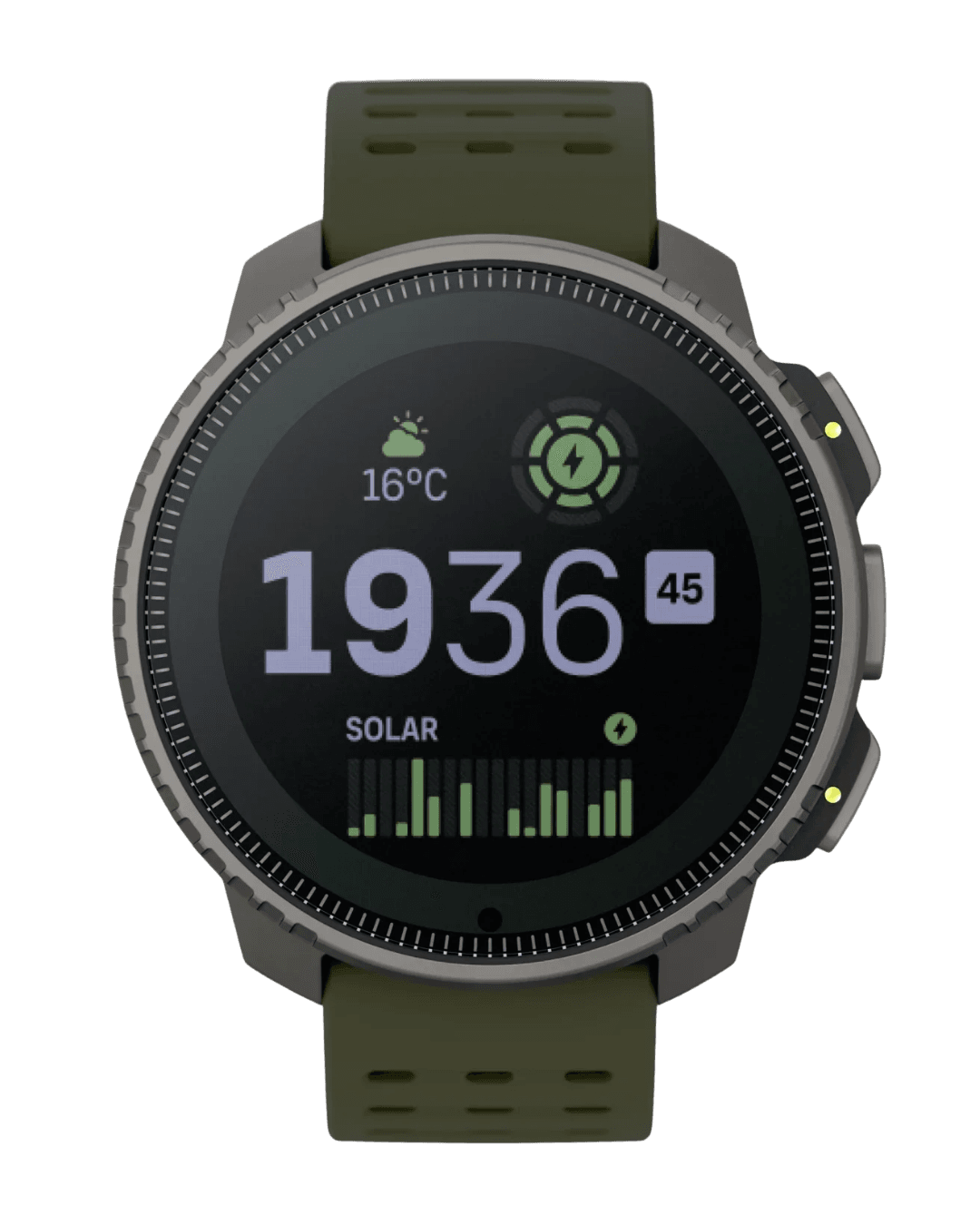
9. Best Fitness Watch for Outdoor Activities — Suunto Vertical Titanium Solar
Key Specs:
- Case: Grade 5 titanium bezel with glass fiber-reinforced polyamide case
- Display: Sapphire crystal touchscreen
- Water resistance: 100m
- Battery: Up to 60 days of daily use, up to a year with solar assistance; up to 90 hours full GPS with solar
- Weight: 74g
Pros & Cons:
Pros:
Up to 90 hours of full GPS tracking with solar assistance, giving it exceptional endurance for long trips
Dual-band GPS/GNSS for more reliable tracking in canyons, forests, and other difficult terrain
Free offline topographic and 3D maps with route planning and rerouting
Sapphire crystal touchscreen and titanium bezel built to handle serious outdoor use
Storm alerts, barometer, and altimeter provide useful information when you’re deep in the backcountry
Cons:
- The 49mm case is large and can feel bulky on smaller wrists
- Everyday smartwatch features aren’t as extensive as what you’ll get from Apple or Garmin
- More than 115 sport modes cover plenty of activities, but strength training isn’t its strongest area
The Vertical Titanium Solar is built for the part of the map where your phone stops being much help.
That’s where its battery life becomes more than a nice spec. With solar assistance, the watch can go for up to 90 hours in full GPS mode, giving you enough room for long hikes and multi-day trips without turning a power bank into another piece of essential gear.
Navigation is just as important. The dual-band GPS stays more reliable in places where mountains and dense forest can make positioning difficult, while offline topographic and 3D maps let you follow a route without cell service. You can plan routes, reroute when needed, and keep moving instead of stopping to figure out where you are.
The Vertical also gives you information that’s genuinely useful when you’re far from the trailhead. The altimeter and barometer help track changes in elevation and pressure, while storm alerts can give you a warning when conditions start turning.
All of that comes in a 49mm watch with a titanium bezel, sapphire crystal, and 100m water resistance. It’s tough, but it’s also big. Smaller wrists will notice it.
The smartwatch side is less impressive, and strength training isn’t as developed as on some rivals. But that’s not really what this watch is trying to be.
If your weekends involve mountains, long trails, and questionable cell service, the Vertical Titanium Solar is built around exactly that kind of use.
Best For: Hikers, climbers, and trail runners who need long battery life, reliable navigation, and serious durability for multi-day backcountry trips.
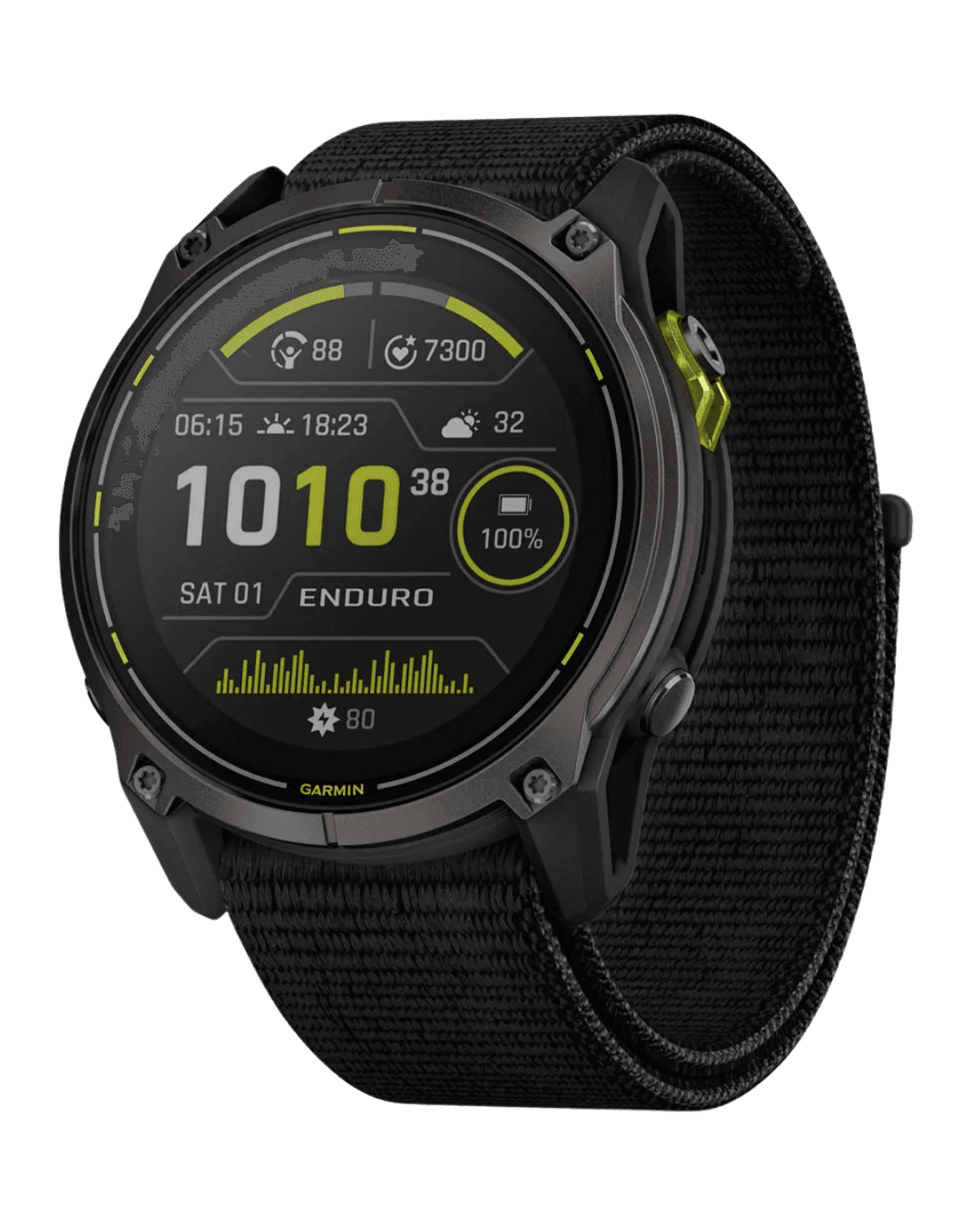
10. Best Fitness Watch for Long Battery Life — Garmin Enduro 3
Key Specs:
- Case: Titanium bezel with fiber-reinforced polymer case
- Display: 1.4″ transflective MIP, 280 x 280
- Water resistance: 10 ATM
- Battery: Up to 36 days in smartwatch mode; up to 90 with solar; up to 320 hours in GPS mode with solar
- Weight: 63g
Pros & Cons:
Pros:
- Up to 320 hours of GPS tracking with solar charging, putting it in a different class from most long-battery fitness watches
- Up to 90 days of smartwatch use with solar assistance
- Lightweight 63g construction with a titanium bezel and scratch-resistant sapphire lens
- Multi-band GPS with SatIQ for accurate positioning without wasting battery unnecessarily
- Expedition GPS mode can stretch tracking to 77 days, with solar extending it even further
Cons:
- $900 makes it one of the most expensive watches here
- Transflective MIP display isn’t as vivid as an AMOLED, particularly indoors
- Its endurance is excessive if you mainly want basic everyday fitness tracking
The Enduro 3 is for people who don’t want their watch to be the thing that runs out of power first.
That matters when a normal weekend adventure turns into several days in the backcountry. With solar charging, the Enduro 3 can deliver up to 320 hours of GPS tracking. You can track a long race or multi-day trip without constantly deciding which features you can afford to leave turned on.
And if you’re not using GPS all day, the numbers get even more ridiculous. Up to 90 days in smartwatch mode with solar assistance means charging becomes something you think about occasionally, rather than every few days.
Garmin also hasn’t made endurance the only priority. Multi-band GPS and SatIQ help maintain accurate positioning while managing power intelligently, and Expedition mode gives you another option when you’re trying to stretch a trip even further.
The hardware fits the same mission. A titanium bezel and sapphire lens keep the watch tough without making it excessively heavy at 63g. The MIP display isn’t going to look as impressive indoors as an AMOLED, but its lower power demands make a lot more sense when battery life is the whole point.
You also get Garmin’s deep training and sports ecosystem, so this isn’t simply a giant battery strapped to your wrist.
The $900 price is hard to justify for casual fitness tracking. But if your idea of a workout involves ultra-distance events, multi-day adventures, or simply going a very long time without seeing a charger, the Enduro 3 is in a league of its own.
Best For: Ultra-endurance athletes and adventurers who need a fitness watch that can keep tracking for weeks or even months without a conventional recharge.
How to Choose the Right Fitness Watch
Once you know what you actually want to use a fitness watch for, the choice gets a lot easier.
1. Match the Watch to Your Activities
Different watches are built around different types of training. Start with the activity you do most.
Running
Look for accurate GPS, reliable heart-rate tracking, and useful training metrics. Pace and distance are the basics. Training load and recovery data become more important if you’re training seriously.
Weight Lifting
Look for strength-training modes and workout tracking. Rep counting can save you some manual logging, while heart-rate and recovery data help you understand how hard you’re actually training.
Swimming
Water resistance comes first. Then look for dedicated swim tracking, including lap counting, stroke recognition, and support for pool or open-water workouts.
Outdoor Activities
GPS and navigation should be high on the list. Rugged construction, long battery life, and strong water resistance matter even more when you’re hiking, climbing, or spending several days away from a charger.
2. Consider Tracking, Battery Life & Durability
Tracking & Sensors
Heart-rate monitoring, GPS, sleep tracking, and blood oxygen sensors are common now.
But don’t get distracted by a huge sensor list. More sensors don’t automatically mean better tracking. Accuracy and useful data matter more than the number of sensors on the box.
Battery Life
Some watches need charging every day. Others last several days, while watches like the Garmin Enduro 3 and Suunto Vertical can stretch into weeks or even months depending on how you use them.
GPS, always-on displays, and continuous health tracking all use more power. Think about your actual routine, not the headline battery number.
Durability
Case materials, screen protection, and water resistance all affect how well a watch holds up.
This matters a lot more if you’re swimming, hiking, camping, or training outdoors than if your watch mostly goes from your desk to the gym.
3. Think About Comfort, Design & Smart Features
These are easy to overlook when you’re comparing specs. But they’re a big part of what it’s actually like to wear the watch every day.
Comfort & Design
Case size, weight, and band material all matter after 12 hours on your wrist.
A 49mm outdoor watch might be perfect for a long backcountry trip but feel ridiculous at the office. If you’re buying one watch for everything, look for a design you won’t mind wearing all day.
Smart Features & Phone Compatibility
Notifications, apps, music, calls, and payments vary widely between brands.
Apple Watch is deeply tied to the iPhone, while Garmin, COROS, Suunto, Amazfit, and Withings take different approaches to smartphone compatibility. Check this before you buy. A great watch isn’t much use if it doesn’t work with your phone.
4. Consider the Overall Value
The most expensive fitness watch isn’t automatically the best one.
Think about the features you’ll actually use: tracking accuracy, battery life, durability, comfort, and smartwatch capabilities.
The goal isn’t to find the watch with the longest feature list.
It’s to find the watch that gives you the right features for your workouts, your daily life, and your budget.
Frequently Asked Questions
1. Are Fitness Watches Accurate?
For the most part, yes.
Modern watches are generally reliable for things like GPS distance and heart rate.
But not every metric is equally precise. Calorie burn and VO2 max are estimates, not lab measurements, so treat them as useful benchmarks rather than exact numbers.
2. Can the Screen Resist Scratches?
That depends on the glass.
Sapphire crystal is much more scratch-resistant than standard mineral glass and is a good choice if you’re hard on your gear.
Watches like the COROS Apex 2 Pro and Suunto Vertical use sapphire crystal for exactly that reason.
3. Are Fitness Watches Safe for Swimming?
Many are.
Just check the water-resistance rating before getting in the pool.
For regular pool swimming, look for at least 5 ATM (50m). If you regularly swim in open water, 10 ATM or higher gives you a better margin.
4. Are Fitness Watches Tough Enough for Extreme Sports?
Some absolutely are.
Rugged watches like the Casio G-Shock GBD-H2000 and Suunto Vertical Titanium Solar are designed for drops, water, and rough outdoor conditions. A standard smartwatch may handle a workout just fine, but these watches are built for much harsher use.
5. Does GPS Drain the Battery Fast?
Yes.
GPS is one of the biggest battery drains on a fitness watch.
That’s why outdoor watches like the Garmin Enduro 3 use dedicated power-saving modes to stretch GPS tracking much further. If you regularly do long hikes, races, or multi-day trips, GPS battery life is worth paying attention to.
6. Do Fitness Watches Work With Any Phone?
Not always.
Apple Watch requires an iPhone, while most Garmin, COROS, Suunto, Amazfit, and Withings watches work with both iPhone and Android.
Check compatibility before buying. This is one of those details that’s easy to overlook until you’ve already bought the watch.
7. Can I Answer Calls and Reply to Texts?
On some watches, yes.
The Apple Watch Series 11 and Garmin Venu 4 let you handle calls, texts, and notifications from your wrist. More fitness-focused watches usually stop at notifications rather than offering full calling and messaging features.
Some of the links on this page are affiliate links. This means if you click and make a purchase, we may earn a small commission at no extra cost to you. We only recommend products we genuinely like and think you’ll enjoy.
Read More